The white cliffs of Dover— to which the name Albion did not originally refer [cf. note]. (photograph: Wikimedia Commons/Fanny) The name Albion first appeared in English in the very first sentence of the first Book of the 9th-century translation of Historia ecclesiastica gentis anglorum (The Ecclesiastical History of the English People) originally written by the English monk, […]
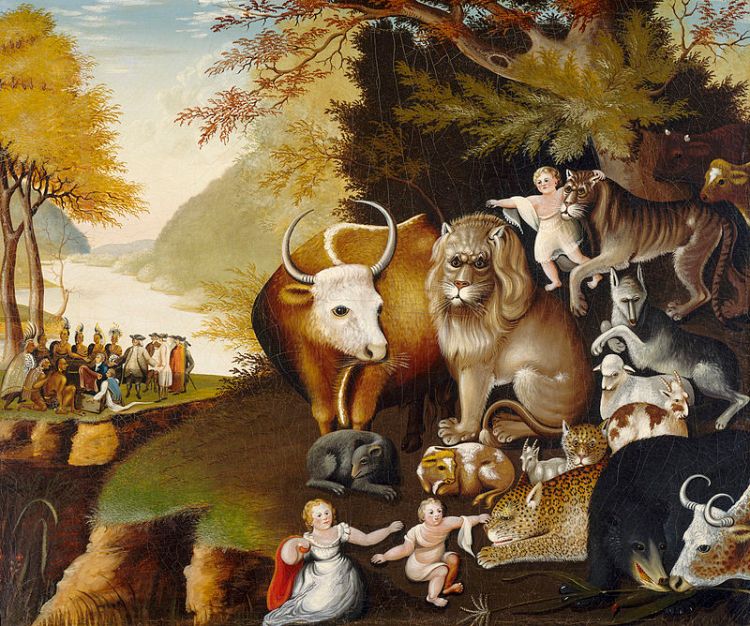
one of the versions of The Peaceable Kingdom (circa 1834), by Edward Hicks image: National Gallery of Art (Washington DC) The expression peaceable kingdom, in the sense of a state of harmony among all creatures as prophesied in the Book of Isaiah, 11:1-9, first appeared in the King James Version (1611): […]
Pig meat has traditionally been a staple food; this is illustrated by this French saying: Dans le cochon tout est bon, De la queue jusqu’au menton. translation: In the pig all is good, From the tail to the chin. However, in French as in English, many pig idioms are derogatory; for example: – avoir […]
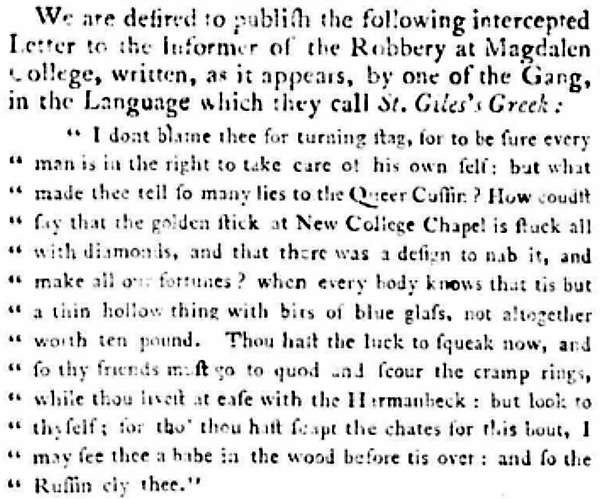
The noun Greek has long been used in the sense of unintelligible speech or language, gibberish, and the phrase it’s (all) Greek to me means I can’t understand it at all. This expression is well known from The Tragedie of Julius Cæsar (1599), by the English playwright and poet William Shakespeare (1564-1616): (Folio […]
“Tell me, man, how goes the enemy?” cartoon published in the Sunday Pictorial (London) of 23rd August 1942 The colloquial phrase How goes the enemy? means What is the time?. Its origin was explained in the text where it is first recorded, published in the Brighton Gazette, and Lewes Observer (Sussex) of 26th October 1826: THE VAMPIRE. N° LVIII. My dear […]
The adjective teetotal in the sense of choosing, or characterised by, total abstinence from all alcohol seems to have first been used about September 1833 by Richard Turner, a worker from Preston, Lancashire, in a speech advocating total abstinence from intoxicating liquors, in preference to abstinence from ardent spirits only (as practised by some early […]
The word cheese is from Old English cēse, cȳse, of West-Germanic origin; it is related to its Dutch and German equivalents kaas and Käse respectively. Those words are ultimately derived from Latin caseus, cheese, which is also the origin of: – Spanish queso – Portuguese queijo – regional Italian cacio – Romanian: caș. Based on […]
The primary meaning of the humorous pseudo-French British-English expression nul points is: a score of zero points in the Eurovision Song Contest, in which the points awarded by each country are announced in both English and French. This expression is composed of: – the French adjective nul, meaning no (that is, not one); the choice of […]
L’astucieuse Viviane était étendue aux pieds de Merlin, by Gustave Doré (1832-1883) from Les Idylles du roi (Paris – 1868), translation of Idylls of the King by Alfred Tennyson The phrase rift in the lute means sign of disharmony between persons, especially the first evidence of a quarrel that may become worse. A rift is a crack in an object, […]
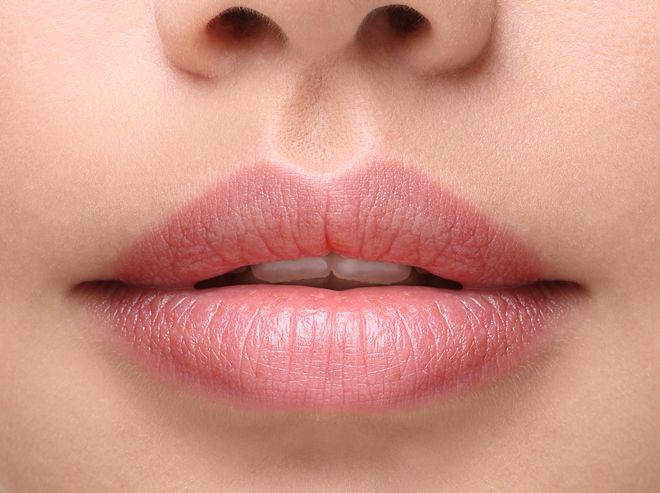
photograph: Google+ Communities The noun philtrum denotes the vertical groove between the base of the nose and the border of the upper lip. The literal and obsolete signification of this word, which appeared in the early 17th century, is love potion, from classical Latin philtrum, of same meaning. In post-classical Latin, philtrum came to also denote the dimple in the upper lip. It […]




 word histories