photograph from When exercise is dangerous: Endurance races risky for group sometimes called ‘middle-aged men in Lycra’ – the Chicago Tribune (Chicago, Illinois) – 17th July 2013 The word MAMIL is an acronym from the initial letters of middle-aged man in Lycra, probably punningly after mammal. Humorous and somewhat depreciative, it denotes a middle-aged […]
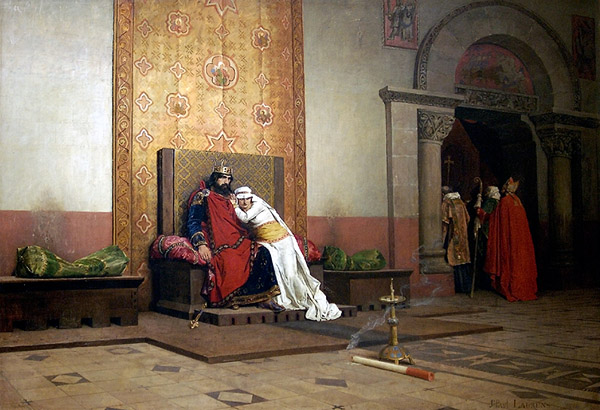
The Excommunication of Robert the Pious (1875), by the French artist Jean-Paul Laurens (1838-1921)—image: Wikimedia Commons The officiants have just excommunicated Robert by bell, book, and candle [note 1], and left the quenched candle behind. Robert II (972-1031), known as the Pious, the son of Hugues Capet, was excommunicated for incest by Pope Gregory V […]
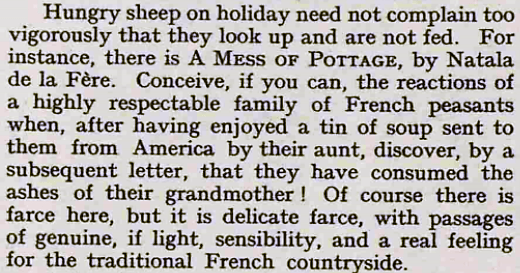
Hungry sheep on holiday need not complain too vigorously that they look up and are not fed. For instance, there is A Mess of Pottage, by Natala de la Fère. Conceive, if you can, the reactions of a highly respectable family of French peasants when, after having enjoyed a tin of soup sent to them […]
This advertisement for the second season (2014) of comedienne Amy Schumer’s sketch show, Inside Amy Schumer, highlighted both the “hot” and “mess” sides of her personality — photograph: Jamey Welch Creative The primary meanings of the noun mess are a serving of food, a course, a meal, a prepared dish of a specified […]
the gods at the Comedy Theatre, London, 1949 source: Historic England – The Theatres Trust Via Middle French galerie, the noun gallery, attested in the late 15th century, is from the medieval Latin of Italy galeria, an alteration of medieval Latin galilaea, designating a porch at the entrance of a monastery’s church—hence English […]
In a letter that she wrote to her sister in December 1797, the English novelist, diarist and playwright Madame d’Arblay (née Frances Burney – 1752-1840) gave an account of a conversation with Princess Augusta, daughter of King George III (Sarah Siddons (1755-1831), one of the greatest English tragediennes, had bought Sadler’s Wells, a London […]
The noun gooseberry denotes a round edible yellowish-green or reddish berry with a thin translucent hairy skin and the thorny shrub which bears these berries. Attested in the first half of the 16th century, it is probably based on Middle-French forms such as grosselle and groiselle (Modern French groseille), perhaps altered because of an unexplained […]
The noun marble, denoting a hard crystalline metamorphic rock resulting from the recrystallization of a limestone, is from Anglo-Norman forms such as marbre and marbelle, and from Old-French forms such as marbre, maubre and mabre, from classical Latin marmor. This Latin noun is from ancient Greek μάρμαρος (= mármaros), shining stone, marble, of […]
TABLOID DRAMA. SHAKESPEARE “BOILED DOWN” FOR THE MUSIC HALLS. Mr. Cecil Raleigh is in favour of Shakespeare being “boiled down” for the music-hall stage. It was after Mr. George Fuller Golden’s lecture on the influence of theatres upon the music-halls, to the members of the O.P. Club at the Criterion Restaurant, last night, […]
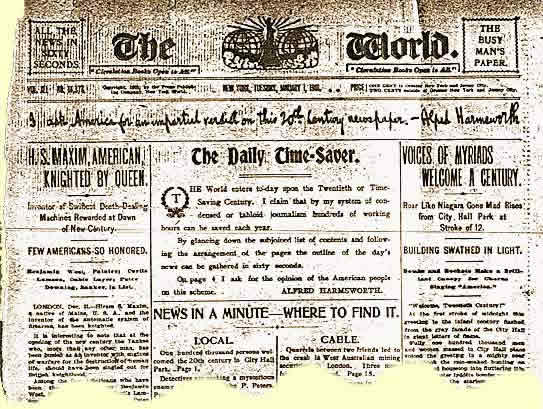
The pharmaceutical firm Burroughs, Wellcome & Company was founded in London in 1880 by the American-born entrepreneurs Silas Burroughs (1846-95) and Henry Wellcome (1853-1936). They registered the name Tabloid (with capital initial) on 14th March 1884, as a trademark for concentrated drugs and medicines in tablet form. (It remains a proprietary name to this day.) The firm applied the […]






 word histories