It has often been said that the noun banger appeared as British slang for sausage in the World War One trenches (cf. also Zeppelin). But, in fact, it was in use in the British Navy before the outbreak of the war. On 27th July 1904, The Tatler (London) published The real letters of […]
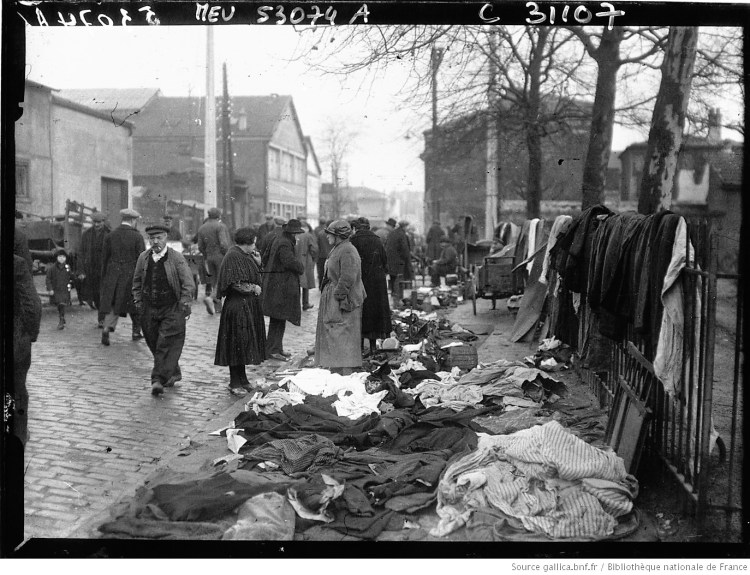
Marché aux puces à Montreuil – Agence Meurisse – 1928 source: gallica.bnf.fr / Bibliothèque Nationale de France The term flea market is a calque of French marché aux puces. Both names denote a street market selling second-hand goods. In In Europe (Pusey Press, New York, 1922), the American author George Samuel Dougherty […]
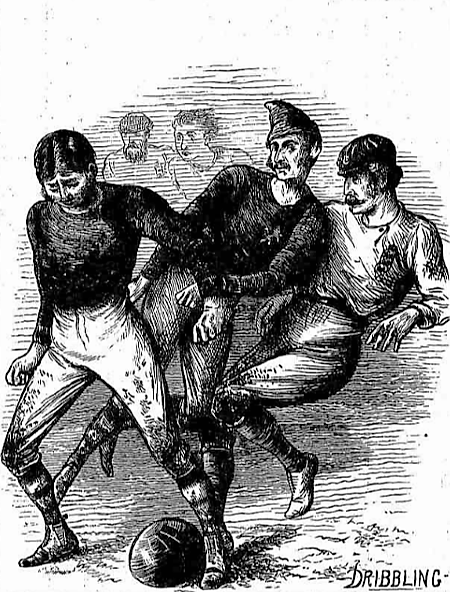
This important match was played on Saturday, November 30, on the ground of the West of Scotland Cricket Club, at Partick, near Glasgow, and was the first international match played in Scotland according to the Association rules. Four matches had been previously played in London between London Scotchmen and Englishmen. (The illustration, from Sketches […]
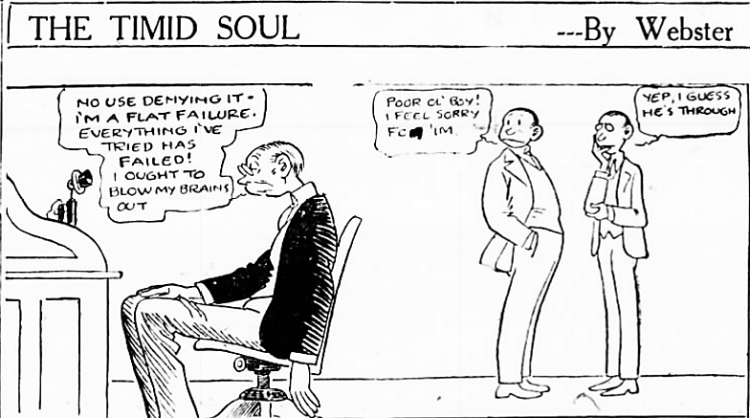
NO USE DENYING IT – I’M A FLAT FAILURE. EVERYTHING I’VE TRIED HAS FAILED! I OUGHT TO BLOW MY BRAINS OUT POOR OL’ BOY! I FEEL SORRY FOR ’IM YEP, I GUESS HE’S THROUGH THAT NIGHT TELEGRAPH OFFICE? I WANT TO SEND A WIRE TO STATION B-L-A-H, 164 BLANK ST. – YOUR CONCERT COMING […]
photograph from When exercise is dangerous: Endurance races risky for group sometimes called ‘middle-aged men in Lycra’ – the Chicago Tribune (Chicago, Illinois) – 17th July 2013 The word MAMIL is an acronym from the initial letters of middle-aged man in Lycra, probably punningly after mammal. Humorous and somewhat depreciative, it denotes a middle-aged […]
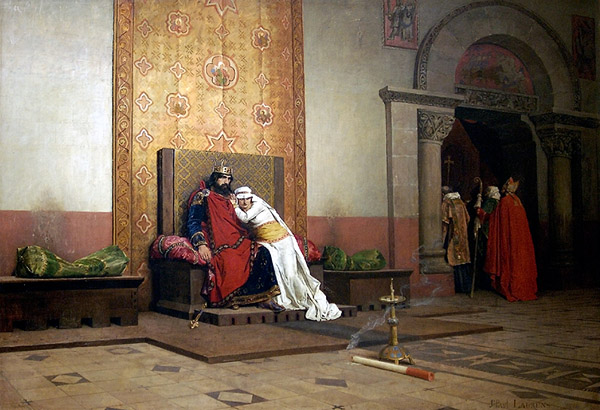
The Excommunication of Robert the Pious (1875), by the French artist Jean-Paul Laurens (1838-1921)—image: Wikimedia Commons The officiants have just excommunicated Robert by bell, book, and candle [note 1], and left the quenched candle behind. Robert II (972-1031), known as the Pious, the son of Hugues Capet, was excommunicated for incest by Pope Gregory V […]
Hungry sheep on holiday need not complain too vigorously that they look up and are not fed. For instance, there is A Mess of Pottage, by Natala de la Fère. Conceive, if you can, the reactions of a highly respectable family of French peasants when, after having enjoyed a tin of soup sent to them […]
This advertisement for the second season (2014) of comedienne Amy Schumer’s sketch show, Inside Amy Schumer, highlighted both the “hot” and “mess” sides of her personality — photograph: Jamey Welch Creative The primary meanings of the noun mess are a serving of food, a course, a meal, a prepared dish of a specified […]
the gods at the Comedy Theatre, London, 1949 source: Historic England – The Theatres Trust Via Middle French galerie, the noun gallery, attested in the late 15th century, is from the medieval Latin of Italy galeria, an alteration of medieval Latin galilaea, designating a porch at the entrance of a monastery’s church—hence English […]





 word histories