The verb hash, which dates back to the mid-17th century, is from French hacher, meaning to chop, to mince, itself from the feminine noun hache, meaning an axe. (English hatchet is from the diminutive of hache, hachette.) The literal sense of the noun hash is a dish consisting of meat which has been […]
Four’s a Crowd.—A merry, irresponsible farce that dips frequently into pure crazy comedy. For this they have chosen to give Errol Flynn and Olivia de Havilland a “break” from their usual story book hero and heroine types. These two lovely young people do very well, but I cannot think that crazy comedy suits them best. […]
The informal British phrase to chance one’s arm means to undertake something although it may be dangerous or unsuccessful. Its origin is unclear. The earliest use that I have found is from How our blue-jackets are fed, an article about the “diet of the British sailor at sea” published in The Weekly Telegraph […]
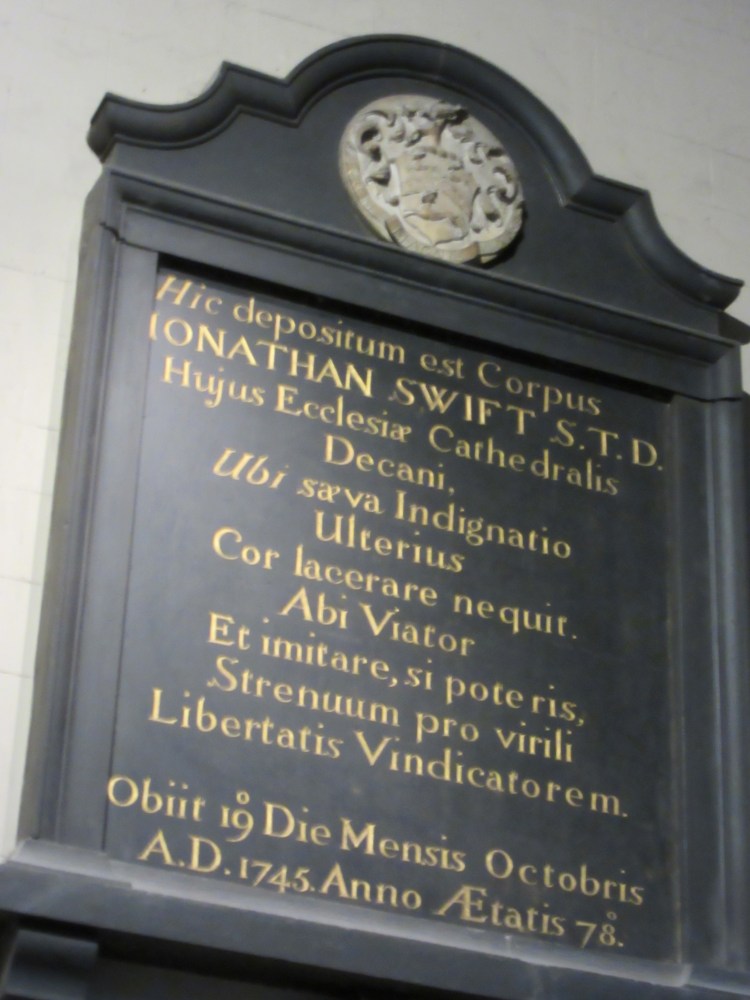
Jonathan Swift’s grave, marked by a simple brass plaque on the floor at the west end of St Patrick’s Cathedral, Dublin, is adjacent to that of his great friend in life, Stella (Esther Johnson – 1681-1728): plaques marking the graves of Jonathan Swift and Esther Johnson Latin sæva indignatio, meaning savage indignation, expresses a […]
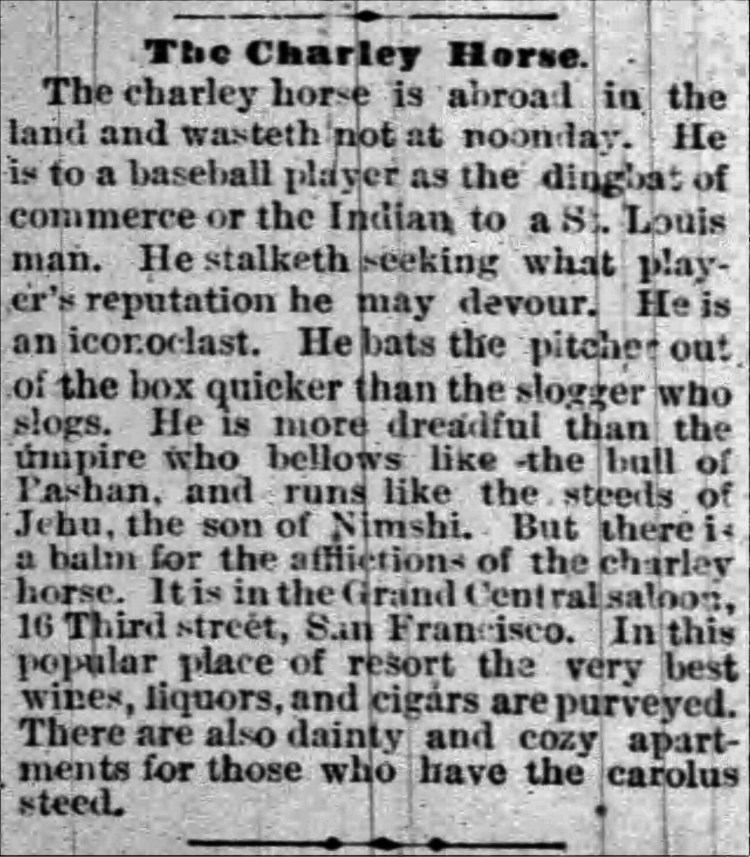
The Charley Horse. The charley horse is abroad in the land and wasteth not at noonday. He is to a baseball player as the dingbat of commerce or the Indian to a St. Louis man. He stalketh seeking what player’s reputation he may devour. He is an iconoclast. He bats the pitcher out of […]
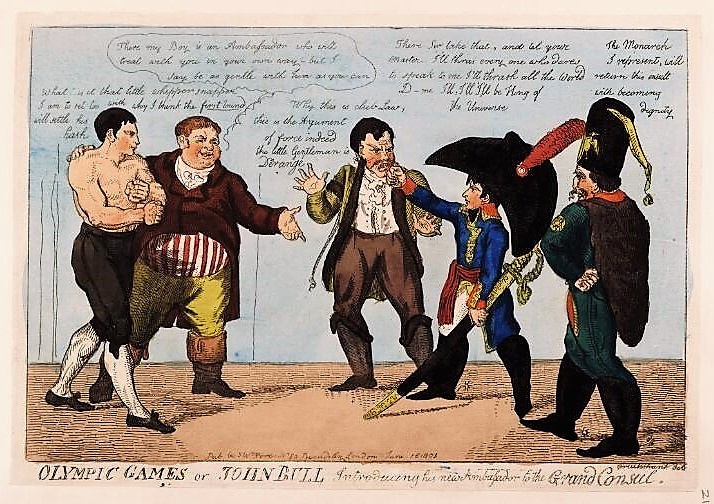
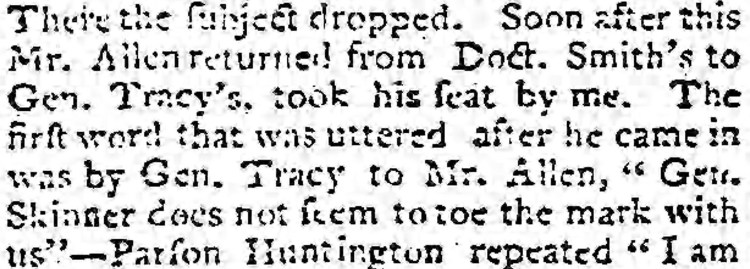
The phrase to toe the line means to accept the authority, policies or principles of a particular group, especially unwillingly. Its literal sense is to stand or crouch with the toes touching the line, especially at the start of a race or fight. The current meaning is an extension of a figurative usage, […]
In cricket, from the resemblance between the figure 0 and a duck’s egg, the term duck’s egg denotes the zero (i.e. 0) placed against a batsman’s name in the scoring sheet when he fails to score. This was explained in Very Hard Cash (1863), a novel by the English novelist and playwright Charles Reade (1814-84): […]
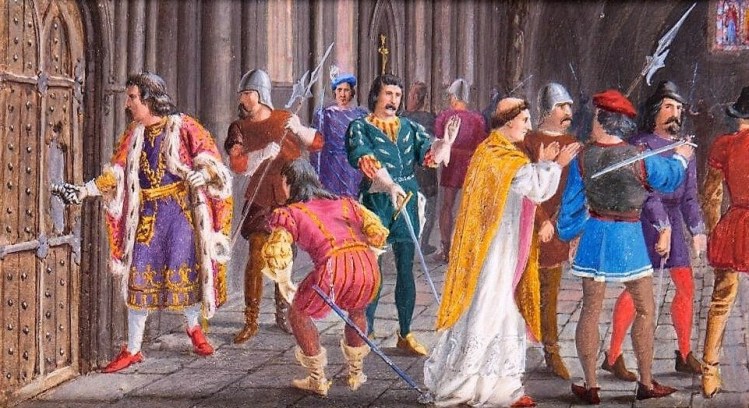
The phrase not to give, care or be worth a tinker¹’s curse, cuss² or damn (or elliptically a tinker’s) is an intensification of not to give, care or be worth a curse, cuss or damn, with reference to the bad language reputedly used by tinkers. The low repute in which tinkers were held is also […]
The name Hogs Norton, also Hog’s Norton and Hogsnorton, denotes a fictional town renowned for its uncultured and boorish inhabitants. It has often been used in depreciative phrases suggesting that someone is a native or inhabitant of this town. These phrases have variously associated the name: – with present-day Hook Norton, a town in Oxfordshire […]
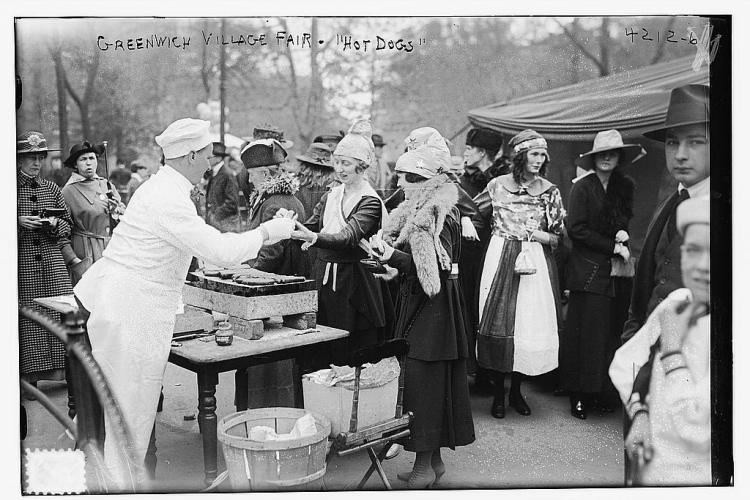
Greenwich Village Fair – “Hot Dogs” – June 1917 photograph: Library of Congress The term hot dog denotes a sausage, especially a frankfurter, served hot in a long roll split lengthways. In US slang, the noun dog has been used to denote a sausage since the late 19th century. This usage is first recorded […]



 word histories