an oxymoronic word: ‘oxymoron’
The word ‘oxymoron’ has the property it denotes: it is from Greek ‘oxús’, meaning ‘sharp’, ‘acute’, and ‘mōrόs’, meaning ‘dull’, ‘stupid’.
Read More
“ad fontes!”
The word ‘oxymoron’ has the property it denotes: it is from Greek ‘oxús’, meaning ‘sharp’, ‘acute’, and ‘mōrόs’, meaning ‘dull’, ‘stupid’.
Read More
In Psalms, the subjugated nation of Moab is compared to a vessel used for washing the feet—hence in school slang ‘Moab’: humorous for ‘washroom’, ‘tub’, ‘sink’
Read More
traceable to Pensées, by Blaise Pascal (1623-62); modern use apparently originated in a speech made in December 1897 by the German statesman Bernhard von Bülow
Read Moreto exact the maximum payment which a person can afford—coined in 1918 by Eric Geddes with reference to the reparations exacted from Germany following WWI
Read MoreVia Irish ‘póg’, Irish-English ‘pogue’ (a kiss) is from ecclesiastical Latin ‘pacem’ (kiss of peace)—the name of the band is from ‘pogue mahone’ (kiss my arse).
Read More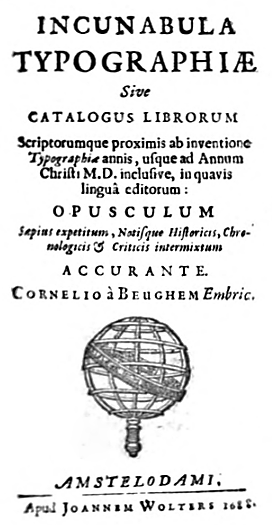
Latin ‘incunabula’: ‘swaddling clothes’, hence ‘beginning’—denotes the early printed books (from the 1450s to the end of the 15th century)
Read More‘the rough end of the pineapple’: harsh or unfair treatment—said to be an Australian phrase, but may have originated in the USA in the mid-20th century
Read More
In Latin, short words having complicated irregularities in their forms gave way to simpler words with regular patterns and longer phonetic individualities.
Read More‘the land of Nod’: a state of sleep—punning allusion to the name of the region to which Cain went after he had killed his brother Abel (Genesis, 4:16)
Read More‘mardy’: ‘sulky’, ‘moody’—from ‘mard’, dialectal alteration of ‘marred’, meaning, of a child, ‘spoilt’, and the suffix ‘-y’, meaning ‘having the qualities of’
Read More word histories