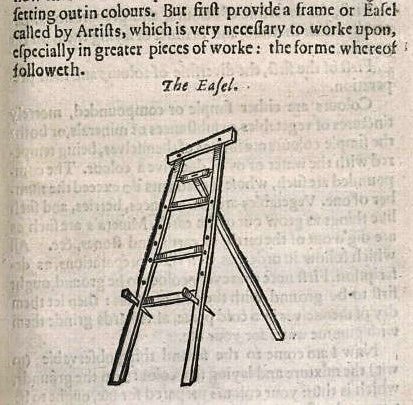
The noun ‘easel’ was borrowed from Dutch ‘ezel’; this sense of ‘ezel’ is a metaphorical extension of its literal meaning, ‘ass’, from the fact that, like a beast of burden, an easel is used to carry things. Likewise, the literal meaning of the synonymous French word ‘chevalet’ is ‘little horse’.
‘happy-clappy’: a member of a Christian group whose worship is marked by enthusiastic participation; composed of ‘happy’ and of the noun ‘clap’ suffixed with ‘-y’—with allusion to the cheerful singing and hand-clapping regarded as typical of charismatic religious services
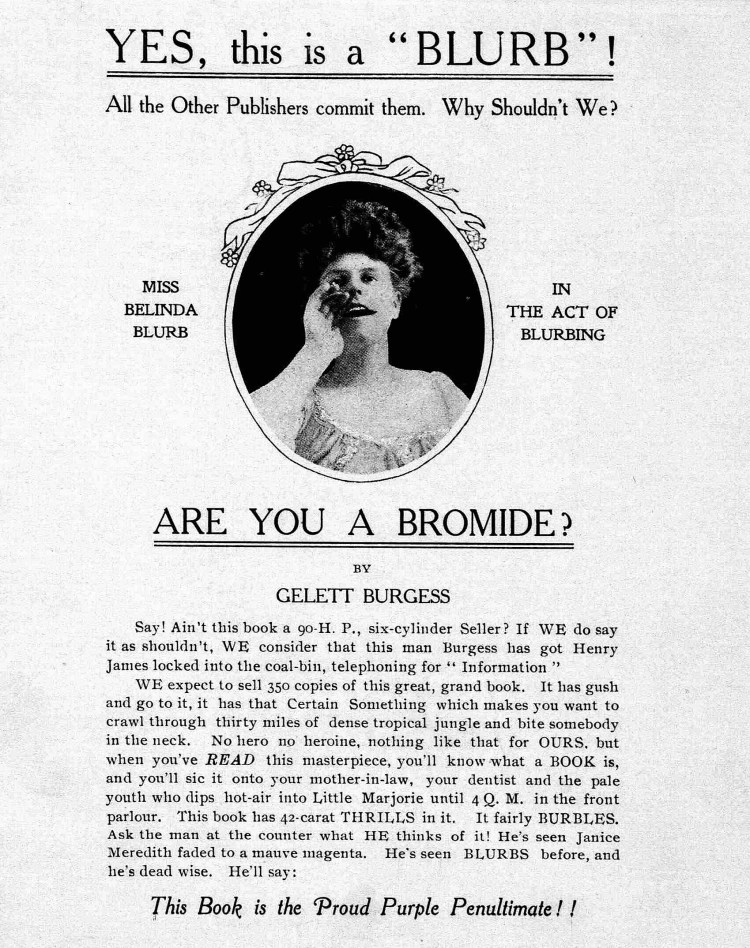
For a limited edition of his book ‘Are You a Bromide?’ sent to the guests of the 1907 annual dinner of the American Booksellers’ Association, Gelett Burgess devised a jacket showing a young lady whom he facetiously dubbed Miss Belinda Blurb.
3 categories of errors exist in the Oxford English Dictionary: errors due to the fact that the contexts of the quotations are not always taken into account; errors perhaps due to lack of coordination between lexicographers; erroneous dating of quotations.
The phrase ‘to turn up one’s toes’, meaning ‘to die’, might have originated in the Irish-English phrase ‘to turn up one’s toes to the roots of the daisies’, first found in the passive form ‘with one’s toes turned up to the roots of the daisies’, meaning ‘lying dead’.
U.S.—‘to see the elephant’: to see life, the world or the sights, as of a large city, to gain knowledge by experience. But in 1842, the original meaning of ‘to see the elephant’ was ‘to get sick and tired of something’.
In British slang, the noun ‘piss-up’ denotes ‘a heavy drinking bout’, and the phrase ‘couldn’t organise a piss-up in a brewery’ and variants mean ‘is’, or ‘are’, or ‘am’, ‘incapable of organising the simplest event, task, etc.’—phrase first recorded in 1980.
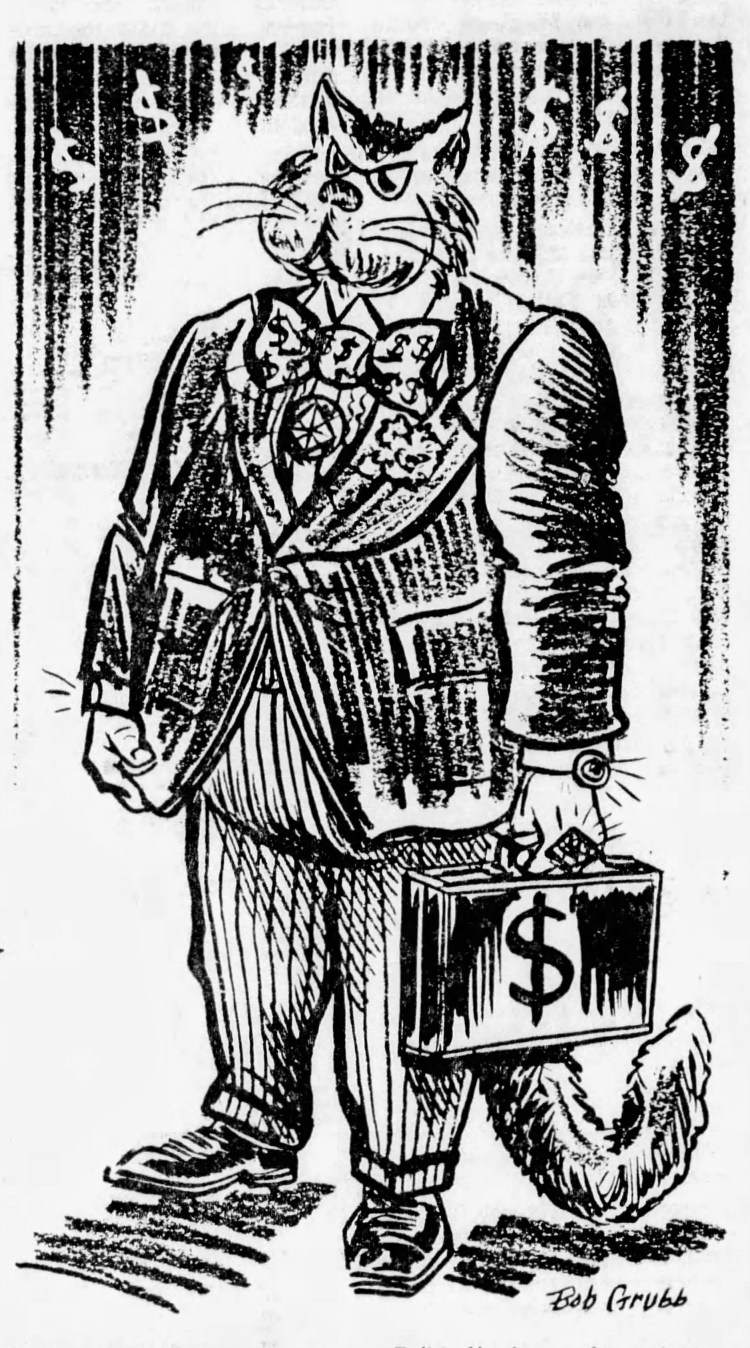
Of American-English origin, the slang term fat cat denotes a wealthy, influential person, especially one who is a heavy contributor to a political party or campaign. The earliest occurrence that I have found is from an article published in The Sun (Baltimore, Maryland) of 1 November 1925.
The noun red tape, meaning excessive bureaucracy or adherence to official rules and formalities, refers to the use of woven red tape to tie up bundles of legal documents and official papers; the literal meaning is first recorded in 1658, the figurative meaning in 1736.
‘Atlantic’ originally referred to Mount Atlas in North Africa, on which the heavens were fabled to rest; it was hence applied to the sea near the western shore of Africa, and afterwards extended to the whole ocean lying between Europe and Africa on the east and America on the west.