Many centuries before becoming a nickname for New York City and the name of a fictional city associated with the Batman stories, Gotham was used in Britain as the name of a (probably fictional) village proverbial for the folly of its inhabitants.
The phrase to chop and change means to change one’s opinions or behaviour repeatedly and abruptly. Here, chop originally meant to barter, and change meant to make an exchange with; in other words, this was an alliterative repetitive expression, the two verbs having roughly the same meaning (cf. also, for example, the alliterative phrase to be part and […]
The phrase ‘to go to pot’ means ‘to be ruined or destroyed’, ‘to go to pieces’, ‘to deteriorate through neglect’. The allusion is to the cutting up of meat into pieces ready for the cooking-pot, as several 16th-century texts make clear.
‘Glamour’ was originally a Scottish alteration of ‘grammar’: this article explains how it came to denote an attractive or exciting quality that makes certain people or things seem appealing. Classical Greek γραμματική (= grammatikḗ) and classical Latin grammătĭca denoted the methodical study of literature, that is to say, philology in the widest modern sense, including textual […]
The 1776 French translation of Laurence Sterne’s ‘The Life and Opinions of Tristram Shandy’ gave to French ‘dada’, a child’s noun for ‘horse’, the figurative meaning of ‘favourite pastime’ or ‘pet idea’.
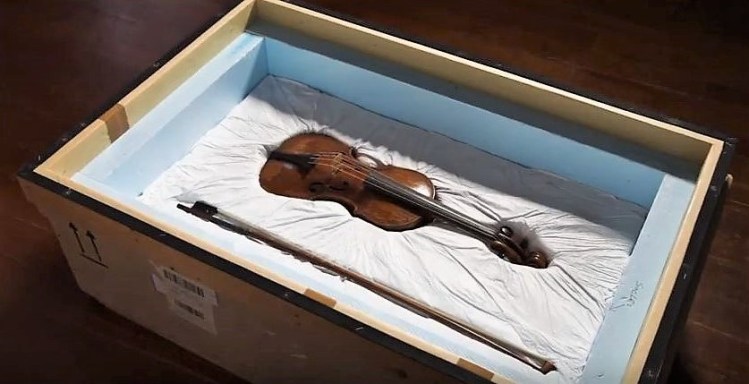
First recorded in The Bystander (London) on 24 January 1906, this French phrase means ‘hobby, pastime’; it refers to the passion that the French painter Jean Auguste Dominique Ingres (1780-1867) had for playing the violin.
‘Hobby’, diminutive of ‘Hob’, pet form of ‘Robert’, was used to denote a small horse, hence a child’s toy with a horse’s head, hence a favourite occupation—cf. French ‘dada’, child’s word for horse, used to denote a favourite pastime
Twelfth Day denotes the twelfth day after Christmas, i.e. 6th January, on which the festival of the Epiphany is celebrated, and which was formerly observed as the closing day of the Christmas festivities. (Epiphany denotes the festival commemorating the manifestation of Christ to the Gentiles in the persons of the Magi; via Old-French and Anglo-Norman forms such as epyphane (Modern […]
from army use on the Western Front during World War One: ‘cootie’, ‘body louse’, ‘cooty’, ‘infested with lice’, ‘coot’, ‘louse’, probably ultimately refer to the aquatic bird called ‘coot’, reputed to be lice-infested
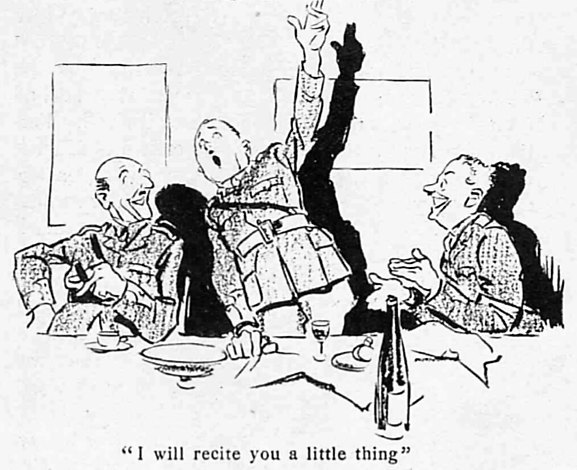
some characteristic slang creations of the British, U.S. and French soldiers during World War One, as recorded in ‘Trench Talk’, published in Everybody’s Magazine (New York) of January 1918


 word histories