The noun ‘wolf whistle’ appeared in the USA in 1943—Wolf-whistling was popularised by the wolf, a cartoon character created by Tex Avery in Little Red Walking Hood (1937), which reappeared in Red Hot Riding Hood (1943).
USA, 1795—Probably a blend of ‘irrespective’ and ‘regardless’, ‘irregardless’ means the same as ‘regardless’. It is regarded as incorrect in standard English, because the negative prefix ‘ir-’ merely duplicates the suffix ‘-less’, and is therefore unnecessary.
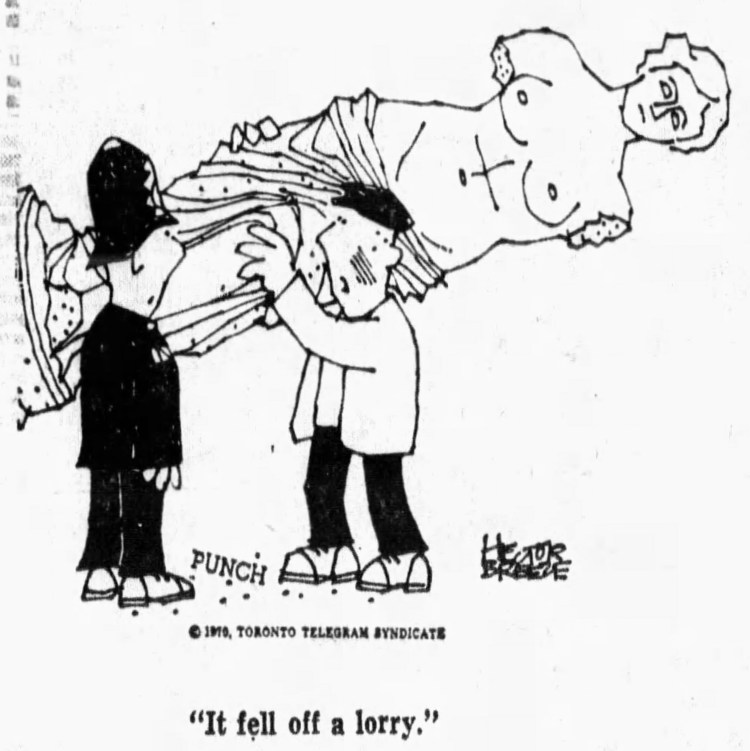
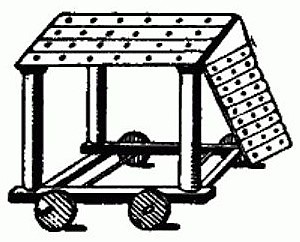
UK, 1953, humorous and euphemistic—‘to fall off (the back of) a lorry’: of goods, ‘to be acquired in dubious or unspecified circumstances’, especially ‘to be stolen’—variant with ‘truck’ came into use later in Australian and North American English
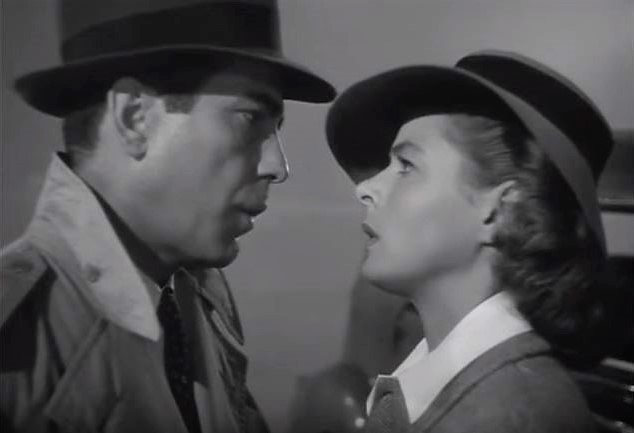
USA, 1871—The phrase ‘here’s looking at you’ is used as a toast in drinking. It is now widely associated with the American film Casablanca (1942), in which Humphrey Bogart addresses Ingrid Bergman with the words “Here’s looking at you, kid.”
Classical Latin ‘muscŭlus’, literally ‘a little mouse’, also denoted ‘a muscle of the body’, especially of the upper arm, from the resemblance of a flexing muscle to the movements made by a mouse; ‘muscŭlus’ was also used in the sense of ‘mussel’.
First recorded in The Leeds Mercury (Leeds, Yorkshire) of Friday 26 August 1938, the phrase ‘to use one’s loaf’ means ‘to use one’s common sense’. Here, ‘loaf’, a shortening of ‘loaf of bread’, is rhyming slang for ‘head’.
USA, 1811—based on the three principal components that make up a flintlock gun: ‘lock’ denotes the firing mechanism, ‘stock’ the handle or wooden shoulder-piece to which it is attached, and ‘barrel’ the tube down which the bullet is fired
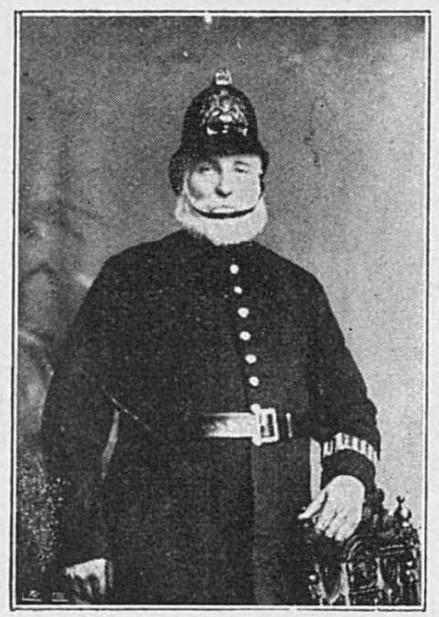
UK, 1844—‘bobby’: a policeman—from ‘Bobby’, pet form of ‘Robert’, in allusion to Robert Peel, who, as Home Secretary, established the Metropolitan Police in 1829—cf. ‘peeler’ (1816), originally a member of the Peace Preservation Force in Ireland established in 1814 by Robert Peel
‘handbag’: to bully or coerce by subjecting to a forthright verbal assault or criticism—originally used with reference to British Prime Minister Margaret Thatcher in The Economist (7 August 1982)—from literal meaning ‘to batter or assault with a handbag’
to create trouble or a commotion—USA, 1840—a euphemism for synonymous phrases such as ‘to raise the Devil’ and ‘to raise hell’—from the name of the eldest son of Adam and Eve and murderer of his brother Abel


 word histories