USA, 1914—‘ailurophile’: a cat lover—‘ailurophobe’: opposite sense—based on ancient Greek ‘aílouros’, ‘cat’, perhaps from ‘aiόlos’, ‘swift’, and ‘ourá’, ‘tail’, the cat being perhaps so called on account of the swift movement to and fro of its tail
from the notion that even a dead cat will bounce if dropped from a sufficient height—UK, 1981: a rapid fall in the stock market with hardly any reaction—USA, 1985: a rapid but short-lived recovery in the stock market after a sharp fall—hence, 1992: any spurious success
‘a stiff upper lip’: a quality of uncomplaining stoicism—now understood as referring to what is believed to be a quintessentially British trait, the repression of emotion, but originated in fact in North America (USA, 1811)
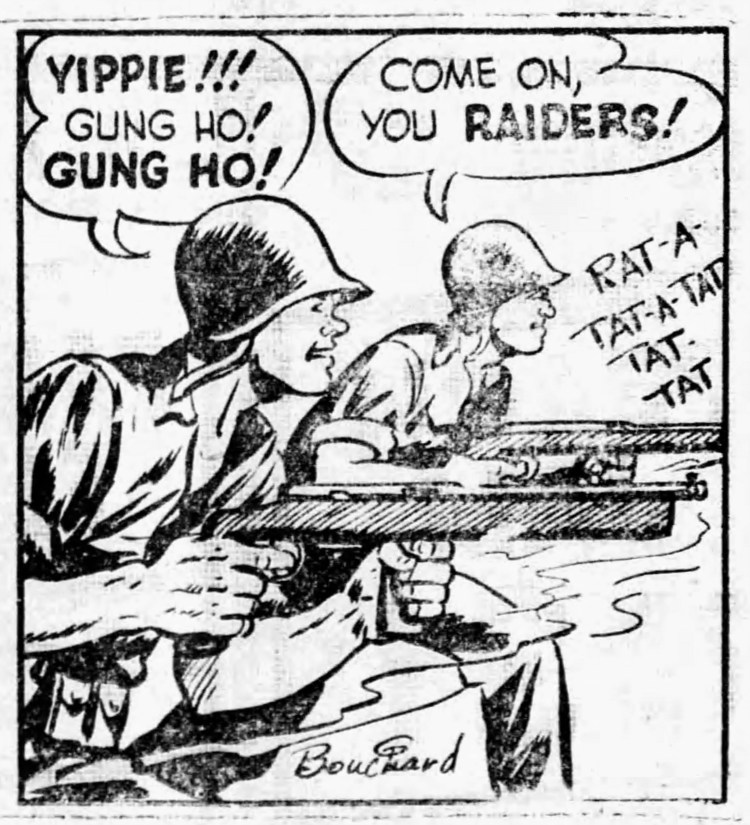
from Chinese ‘gōnghé’, short for ‘Zhōngguó Gōngyè Hézuò Shè’ (Chinese Industrial Cooperative Society)—interpreted as a slogan meaning ‘work together’ (USA, 1941)—adopted by Evans F. Carlson, commander of the 2nd Marine Raider Battalion (1942)
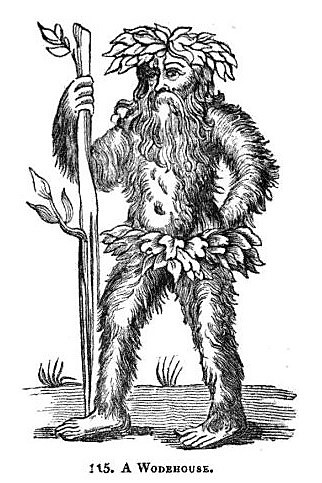
three meanings: 1/ in outdoor pageants: a man dressed in greenery, representing a wild man of the woods—2/ in inn names and signs: a forester—3/ in medieval English churches: a representation of a man’s face composed of, surrounded by, or sprouting foliage or branches
USA, 1916—used in collocation to seek or provide clarification between the two main meanings of ‘funny’: ‘funny-ha-ha’ means ‘funny’ in the sense ‘amusing’ or ‘comical’ – ‘funny-peculiar’ means ‘funny’ in the sense ‘strange’ or ‘peculiar’.
The phrase ‘footloose and fancy-free’ means ‘not committed or tied to anyone or anything’—it appeared in the 1860s only, in U.S. political contexts, although each of its elements dates from the 17th century.
USA, 1917 (with ‘footie’): to touch somebody’s foot lightly with one’s own foot, especially under a table, as a playful expression of romantic interest—hence also, figuratively: to have underhanded dealings with somebody
UK, 1945—‘demob happy’: feeling elated in anticipation of demobilisation from the armed forces—hence: in anticipation of the end of a job, assignment, etc.—in extended use: in anticipation of the end of any onerous or unpleasant period
UK, 1823—‘a hurried departure at night, especially from rented accommodation to avoid payment of rent owed’—‘flit’, noun use of ‘to flit’, originally used in Scotland and Northern England to mean ‘to move house or leave one’s home’

 word histories