‘Beatle boot’: meaning and origin
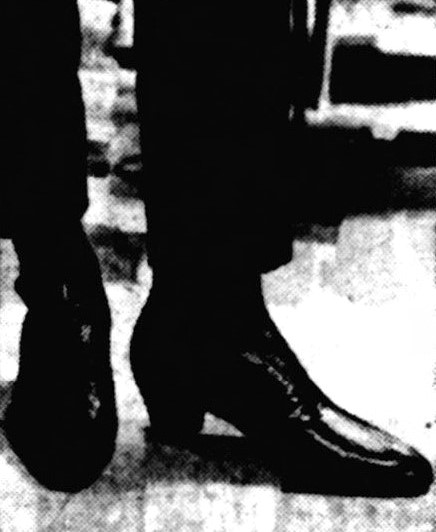
UK & Ireland, 1963—a type of ankle boot worn by men, that was popularised by the Beatles
Read More
“ad fontes!”
UK & Ireland, 1963—a type of ankle boot worn by men, that was popularised by the Beatles
Read Morea game in which players must obey a leader’s instructions if, but only if, they are prefaced with the words ‘O’Grady says’—UK, 1917—game invented during World War One as a play-way for conducting physical exercises and drill in the British Army
Read Morethe earliest occurrences of ‘feet of clay’, used without explicit reference to the Bible, date from the French Revolution (1789-1799) and translate French ‘pieds d’argile’
Read Moreto be in control of a situation; to be in a dominant position—USA, 1899—originally (USA, 1867) used in reference to hunting game animals
Read Morenonsense, rubbish—USA, first decade of the 20th century—probably a euphemism for the noun ‘bullshit’, with the noun ‘dust’ used in the sense of ‘rubbish’, ‘garbage’
Read More1910: a cheap and common watch—hence (from 1922 onwards) used in various phrases referring to silliness, reliability/unreliability, erraticism, cheapness, funniness
Read Moreliterally (1845): an enclosure in which calves are isolated from their mothers until weaned—figuratively, humorously and offensively (1885): a girls’ boarding-school—similar to the use of ‘cow’ to derogatorily designate a girl or woman
Read MoreUSA, 1867—all over the place, in disarray—perhaps originally used by cattlemen of mobs of cattle all over the place
Read Moremusic characterised by excessive or extravagant riffing—USA, 1975—from ‘riff’ (a short repeated musical phrase) and ‘-orama’ (used to form nouns designating a display, event, etc., of considerable size or expanse)
Read MoreUSA, 1913—an extremely large area—the second half of this phrase varies, in particular according to the speaker’s locality
Read More
