the coinage of an Irish political term: ‘whataboutery’
1974—coined by the Irish journalist John Healy with reference to the Troubles in Northern Ireland
Read More
“ad fontes!”
1974—coined by the Irish journalist John Healy with reference to the Troubles in Northern Ireland
Read More1825, Anglo-Irish alteration of ‘by Jesus’—1867 as one word—‘the bejesus out of’ (1931) intensifies the action conveyed by the preceding verb
Read MoreWhy is the element one in words such as alone and only not pronounced like the numeral one? Both the indefinite article an (a before consonant) and the numeral one are from Old English ān—which has survived in Scotland as ane, used both as indefinite article and as numeral. This Old-English word ān meant a/an, one, […]
Read MoreScotland, 1749—from the idea of daring to grab a lion’s “beard” and figurative uses of ‘beard’: (verb) ‘confront’ – (noun) ‘face’
Read More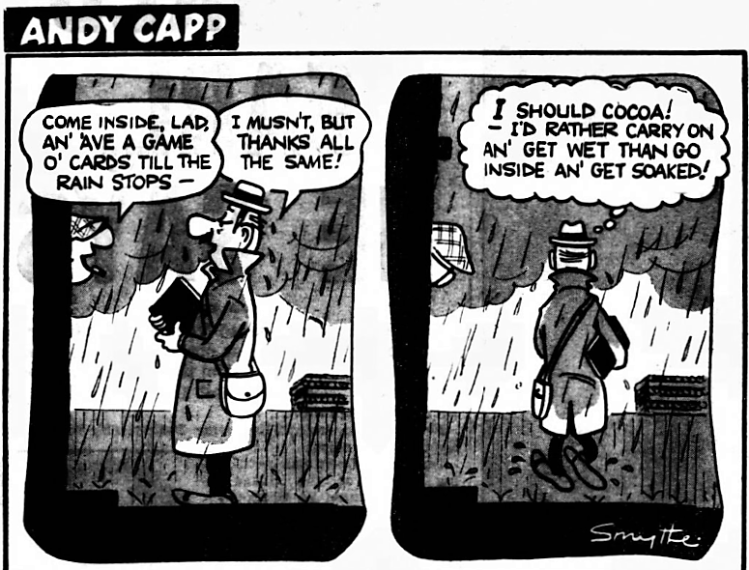
UK slang, 1936—emphatic agreement, though often ironical—‘cocoa’ is said to be rhyming slang for ‘so’ in ‘I should say so’
Read Morevery fast, or very hard—UK, 1942, RAF slang—alludes to the moving metal piece within a bell, which strikes it and produces the sound
Read MoreUK, 1948—USA, 1952—from the image of the over-cautious man who wears both a belt and braces/suspenders to hold up his trousers
Read MoreUSA, 1950s—‘that’s how the cookie crumbles’: that’s how it is—‘(that’s when) the cookie crumbled’: (that’s when) a decisive change in a situation occurred
Read More
Fundamentally, I object to the will of any group to artificially modify language in order to impose their world view.
Read More‘robe’ originally denoted something that has been robbed—French ‘voler’ (‘to fly’) has come to mean ‘to steal’ via falconry
Read More word histories