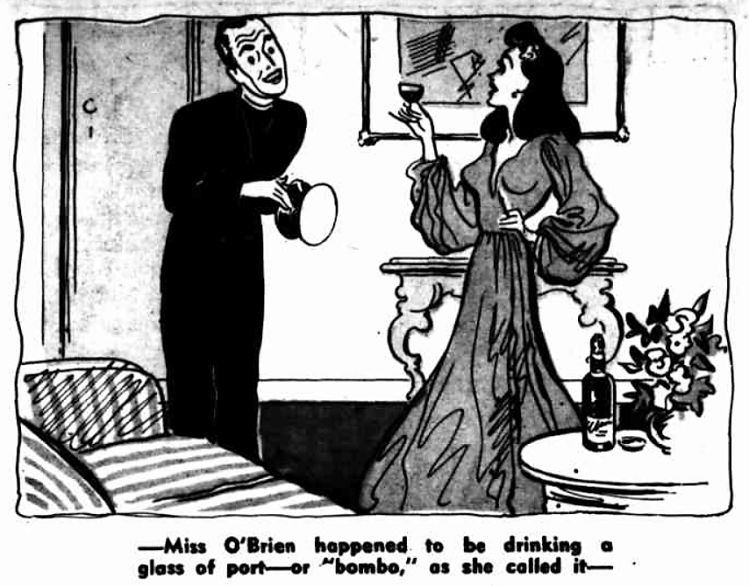
1941 in the sense ‘under the influence of alcohol’—aided by the phonetic similarity of ‘grip’ and ‘grape’, this phrase has, in the course of time, been coined on separate occasions by various persons, independently from one another
Australia, 1909—to the greatest possible extent; sated with food—dolls used to have modelled wax heads with a neck shaped so that it could be sewn to a stuffed rag body
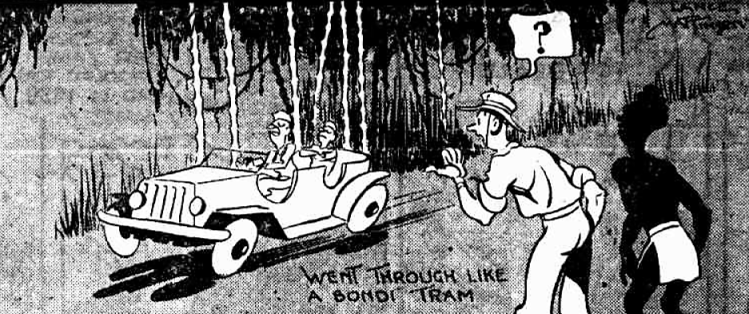
Australia, 1940—means ‘speedily’—refers to the tram service between Sydney, New South Wales, and Bondi Beach, a popular beach located 4 miles east of Sydney city centre
Australia, 1888—defined by Wilkes in A Dictionary of Australian Colloquialisms (1990) as “An imaginary rich uncle overseas, backing some venture in which the unwary may be persuaded to invest.”
Australia, 1888—denotes a letter (i.e., a written message)—‘yabber’: as a noun, denotes speech, language, talk; as a verb, means to talk—from an aboriginal stem ‘ya’, meaning to speak
British English, 1843—The theatrical phrase it will be (or it will come) all right at night (or all right on the night) means the opening night will go well.
originated (1915) as the jocular beginning, destined to grip the reader’s attention, of a hypothetical novel or short story—soon (1919) came to be also used either without precise meaning or as a jocular exclamation
1947—is used to express an attitude of insularity and hostility to foreigners attributed to the British—a shortening of ‘golliwog’, the derogatory and offensive noun ‘wog’ designates a non-white person
title of a CBS television documentary first broadcast in 1966—came to be used derogatorily of any fast package-tour—gave rise to the pattern ‘(if) it’s Tuesday, this (or it) must be ——’, used of travel anywhere

 word histories