‘Hollywood ending’: meanings and origin
USA, 1927—a conventional film ending, regarded as sentimental or simplistic, and often featuring an improbably positive outcome—by extension: an improbably positive outcome to a real-life situation
Read More
“ad fontes!”
USA, 1927—a conventional film ending, regarded as sentimental or simplistic, and often featuring an improbably positive outcome—by extension: an improbably positive outcome to a real-life situation
Read MoreAustralia, 1981—the ideology of the Australian Labor Party’s left wing, “for whom the ultimate test of a policy is the feeling of personal virtuousness to be derived from its espousal”—Labor politician James McClelland claimed to have coined this phrase
Read MoreUSA, 1992—to reduce staff numbers to levels so low that work can no longer be carried out effectively—portmanteau, coined by the Trends Research Institute, combining the adjective ‘dumb’, meaning ‘stupid’, and the verb ‘downsize’
Read MoreUSA, 1883—deliberate transposition of the initial consonants of ‘plot’ and ‘thickens’ in ‘the plot thickens’—‘the plot thickens’, attested in 1672, means: the storyline becomes more complex or convoluted
Read MoreBritish and Irish English, 1833—denotes qualified pleasure—also: ‘to give [someone] a poke in the eye (with a — stick)’, meaning to deprecate [someone]—from ‘a poke in the eye’, denoting something undesirable
Read MoreUK, 1965—in sports such as rugby and soccer: a pass to a player likely to be tackled heavily as soon as the ball is received—the implication is that the player who receives the ball may end up in hospital, or, at least, be injured
Read MoreAustralia, 1982—a familiar name given to the Long Bay Correctional Complex, a correctional facility located in Malabar, Sydney, New South Wales
Read MoreAustralia, 1973—used of anything that is absolutely unacceptable, and of any disagreeable situation or experience—‘Jap’: derogatory shortening of ‘Japanese’—Anzac Day: commemoration of the landing of the Australian and New Zealand Army Corps in the Gallipoli Peninsula in 1915
Read More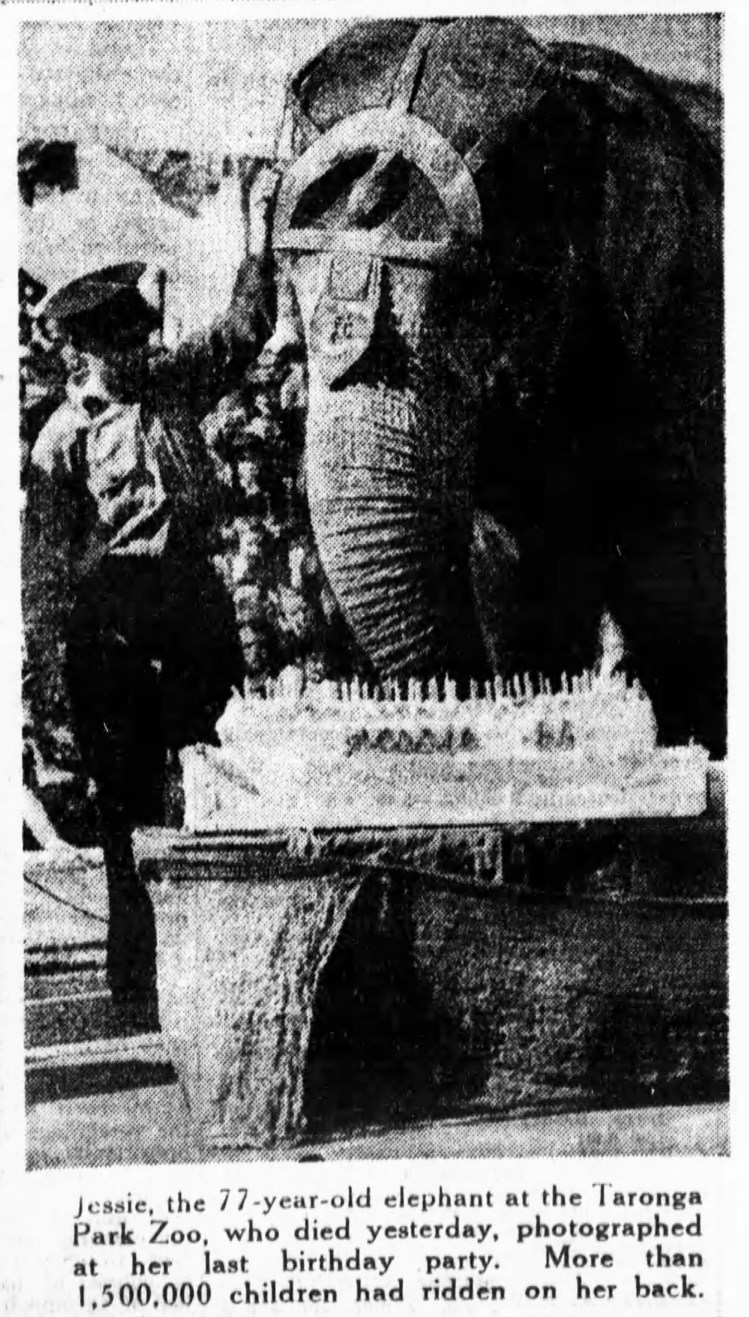
Australia, 1919—an excess of effrontery—puns on two meanings of ‘hide’ (the skin of an animal – effrontery) and refers to ‘Jessie’, the name of an elephant that was kept in the zoological gardens of Sydney, New South Wales
Read MoreUK, 1890—USA, 1899—the humorous phrase ‘the nineteenth hole’ denotes the bar room in a golf clubhouse, as reached at the end of a standard round of eighteen holes
Read More word histories