‘william-nilliam’: meaning and origin
1907—whether one likes it or not; haphazardly—a humorous variant of ‘willy-nilly’, after the personal name ‘William’ (‘William’ being familiarly shortened to ‘Willy’)
Read More
“ad fontes!”
1907—whether one likes it or not; haphazardly—a humorous variant of ‘willy-nilly’, after the personal name ‘William’ (‘William’ being familiarly shortened to ‘Willy’)
Read MoreUK—(used of a group of people) to keep passing the initiative or responsibility from one person to another, so that no action is taken—refers to a party game in which a gift wrapped in several layers of paper is passed around a circle of players to the accompaniment of music, the losers in successive rounds being those holding the parcel when the accompanying music stops
Read More‘parting shot’ (1817); ‘Parthian shot’ (1822): a sharp, telling remark, act, gesture, etc., made in departing—‘parting shot’: literally the final shot fired at the moment of departure—‘Parthian shot’: refers to the Parthian horsemen’s habit of shooting arrows backwards while in real or pretended retreat
Read MoreScotland, 1825 (as ‘bane idle’)—England, 1839—utterly lazy or indolent—‘bone’ seems to be used as an intensifier with adverbial force in the sense ‘through to the bone’, i.e., ‘deeply and fundamentally’
Read MoreUSA, 1843—With reference to a dog used for hunting game, this phrase is used to express the opinion that a particular plan or approach will not succeed.
Read MoreUK, 1789—With reference to cockfighting, this phrase is used to express the opinion that a particular plan or approach will not succeed.
Read MoreUSA, 1927—denotes male vigour, especially sexual—with wordplay on ‘penis’—interestingly, via an alteration of the Latin diminutive ‘pēnĭcillus’, denoting literally a little tail, hence a painter’s brush or pencil, ‘pencil’ is derived from Latin ‘pēnis’, denoting literally a tail, hence the penis
Read MoreUSA (New England), 1868—alternately sunny and cloudy conditions usually indicate rain—the adjective ‘shet’ is a variant of ‘shut’—it was perhaps in order to provide a rhyme for the adjective ‘wet’ that the variant ‘shet’ was chosen in the proverb
Read More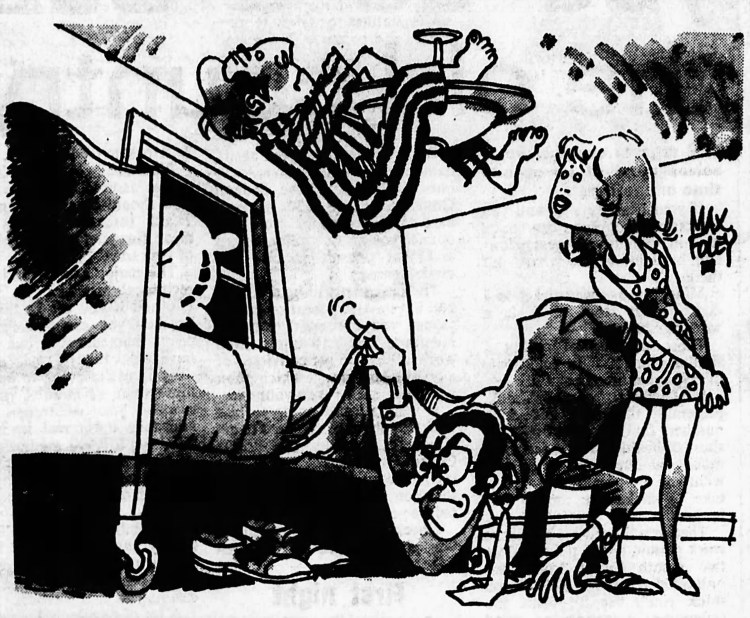
has been used to denote evidence of a de facto relationship affecting a woman’s eligibility for Social-Security benefits—refers to past practices of field officers inspecting homes and bedrooms
Read More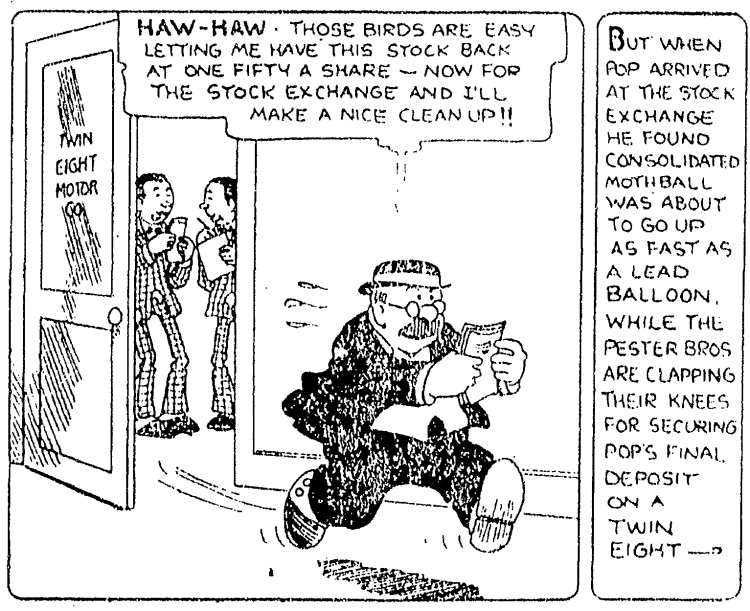
USA, 1933—a failure, an unsuccessful venture—especially used of suggestions, jokes, etc., made in public—the image is of a balloon made of lead plummeting to the ground
Read More
