‘we’ve got a right one here’: meaning and early occurrences
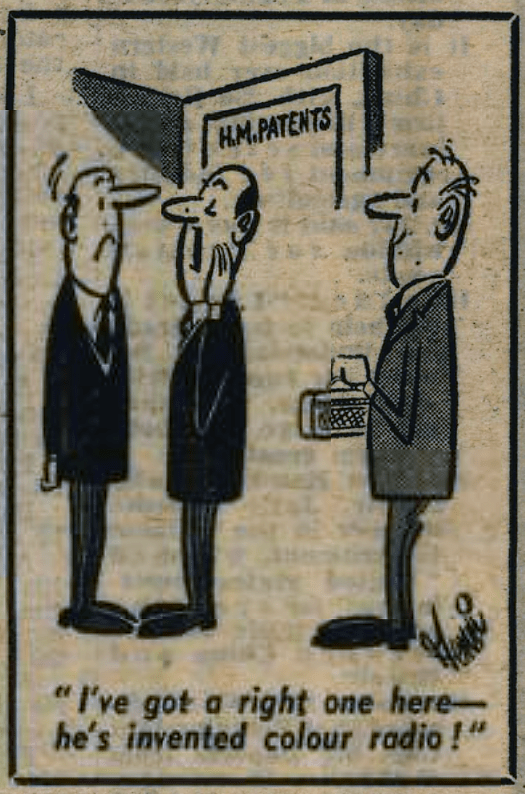
UK, 1958—The phrase ‘we’ve got a right one here’ is used of an odd person or of an idiot. Typically, the speaker uses this phrase when talking to someone about a third party.
Read More
“ad fontes!”
UK, 1958—The phrase ‘we’ve got a right one here’ is used of an odd person or of an idiot. Typically, the speaker uses this phrase when talking to someone about a third party.
Read MoreLancashire, England, 1973—a wasted journey; a weird way of behaving; a fit of ill temper—origin unknown—one hypothesis is that when wine boats from the Mediterranean arrived in Liverpool, the wine was occasionally sour and therefore useless
Read MoreUSA, 1812—UK, 1818—the name of a character proverbially said to have been so great a liar that he was expelled from Hell—hence, frequently in ‘a bigger liar than Tom Pepper’, and variants: an outrageous liar
Read More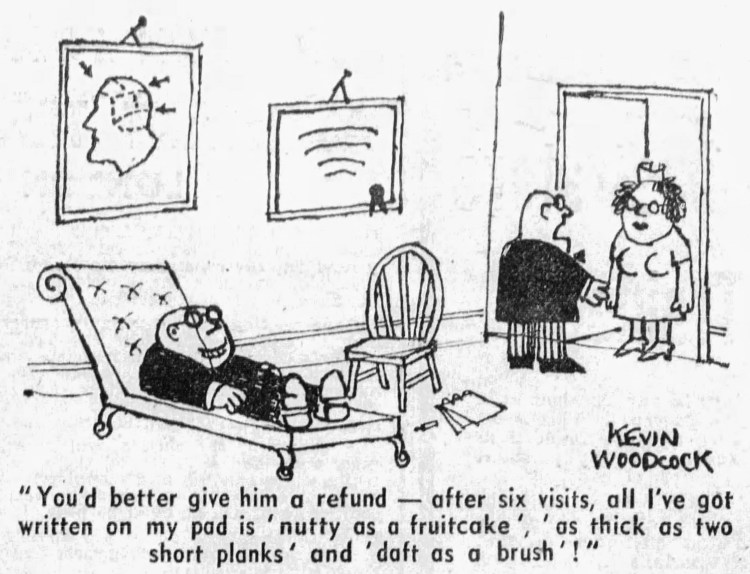
UK, 1954—very stupid—the humorous arbitrary comparison with ‘two short planks’ gives emphasis to the adjective ‘thick’, meaning stupid
Read MoreLancashire, England, 1833—a faggot, a meatball, “a compound of onions, flour, and small pieces of pork” (The Liverpool Echo, 20 August 1880)—probably one of the common dishes humorously named after daintier items of food
Read MoreLiverpool, England, 1939—scouse without meat—“from the general early sense of ‘blind’ meaning ‘deficient’” (Liverpool English Dictionary)—‘scouse’, shortened form of ‘lobscouse’: “a dish of hashed meat stewed with potatoes and onions; an Irish stew” (English Dialect Dictionary)
Read More1910—used of a weakling, or of someone or something that is ineffectual—may have originated in Yorkshire, a county of northern England
Read MoreUK, 1954—used of a weakling or of an ineffectual person—‘Echo’ refers to the Liverpool Echo, a newspaper published in Liverpool, England—but perhaps refers, on one occasion, to the South Wales Echo, published in Cardiff, Wales
Read MoreUK, 1929—‘glad and sorry’ denotes hire purchase, i.e., a system by which one pays for a thing in regular instalments while having the use of it—the image is that the hire-purchaser is at the same time glad to have the use of the merchandise and sorry to still have to pay for it
Read Moreused attributively of something that may not have an end for years, if ever—especially used of a loan that the borrower refuses to pay back, and of hire purchase—refers to the line “It may be for years, and it may be for ever” in the song ‘Kathleen Mavourneen’ (1835)
Read More word histories