Australia, 1970—a Melbourne City Council parking officer—the adjective ‘grey’ refers to the colour of those officers’ uniform; the noun ‘meanie’ refers to the nastiness displayed by those officers in the accomplishment of their duties
Australia, 1985—Coined after ‘corkage’, the noun ‘cakeage’ denotes, in a restaurant, the cutting and serving of a cake that has been brought in by a customer from off the premises, hence also a charge levied for this service.
USA—‘blue-sky talk’ 1900—‘blue-sky research’ 1947—the adjective ‘blue-sky’ is used to mean: (in negative sense) fanciful, hypothetical; (in positive sense) creative or visionary—from the notion of a blue sky as a place free from disturbances or difficulties
Australia, 1902—of no use or advantage whatsoever, no good at all—origin unknown—alliterative effect and phonetical factors proper to Australia may have contributed to the currency of the phrase
the phrases built on the pattern ‘to out-X X’, in which ‘X’ is a person’s name, mean to be superior to X in his or her characteristics—the prefix ‘out-’ has been used to form verbs conveying the sense of surpassing, exceeding or beating in the action described by the simple verb
informal and often humorous: denotes the explicit or most intimate details of something—originally (USA, 1859) referred to accounts or representations of acts of violence and bloodshed
UK, 1995—a derogatory designation of New Labour, i.e., a right-wing/social democratic trend in Labour thinking and policy, advocated by Tony Blair—‘Tory’: the British Conservative Party; ‘lite’ (phonetic respelling of the adjective ‘light’): a moderated version of something
UK, 1819—has been used in various jocular phrases referring to alcohol consumption—punningly alludes to ‘lush’, which, as a noun, denotes alcoholic drink, and, as a verb, means to consume alcohol—‘the City of Lushington’: a convivial society, consisting chiefly of actors, which met at the Harp Tavern, London
1950—the exercise of ploys and tactics in order to minimise time spent waiting in a queue—composed of the noun ‘queue’ and the suffix ‘-manship’—here, ‘-manship’ does not refer to the skills worthy of a role, as in ‘horsemanship’ and ‘statesmanship’, but to the ploys used to gain the upper hand, as in ‘gamesmanship’
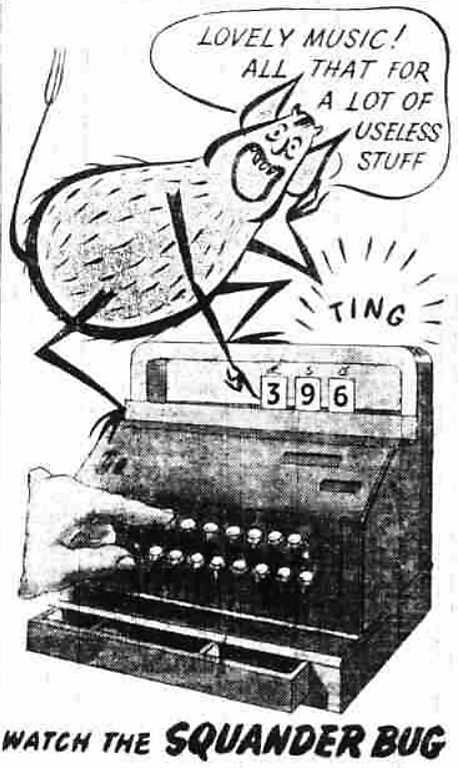
1943—a devilish insect symbolising reckless extravagance and waste—introduced by the National Savings Committee in a government publicity campaign promoting economy—hence: one who is profligate with money or resources


 word histories