‘bag stuffer’: meaning and origin
USA, 1950, as ‘shopping-bag stuffer’—an advertising leaflet or similar piece of promotional material handed out to shoppers or placed in shopping bags alongside goods purchased
Read More
“ad fontes!”
USA, 1950, as ‘shopping-bag stuffer’—an advertising leaflet or similar piece of promotional material handed out to shoppers or placed in shopping bags alongside goods purchased
Read More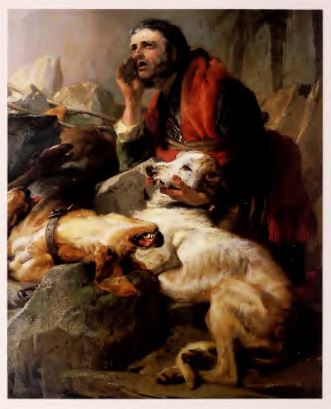
an assertion of continuing competence, strength, etc., notwithstanding evidence to the contrary—from the title of a painting by the British artist Edwin Landseer, first exhibited in 1838
Read More1969—associated with Malcolm Fraser, Prime Minister of Australia from 1975 to 1983, who borrowed it from George Bernard Shaw’s Back to Methuselah (1921)
Read More1910—a humorous phonetic transcription of the phrase “goes into”, as originally used at school in arithmetic lessons (as in “4 guzinter 8 two times”)—hence, by extension: a schoolteacher
Read MoreAustralia, 1890: an analysis of the state of the weather at sea—UK, 1926: the BBC-radio broadcast of weather reports and forecasts for the seas around the British Isles
Read Moreslang, disparaging: a person of small stature—from 1677 onwards in bilingual dictionaries (English-French and French-English) by Guy Miege
Read Morethe fatty extremity of the rump of a goose, fowl, etc.—so called from the resemblance of this fatty extremity to the human nose—UK, 1826—earlier synonym: ‘pope’s nose’ (UK, 1788)
Read MoreUK, 1828: an extremely severe clerical schoolmaster—Australia, 1885: any extremely severe magistrate, originally in reference to Parramatta magistrate Samuel Marsden (1765-1838)
Read MoreAustralian slang, 1988—a very small distance or amount—perhaps intended as a humorous variant of ‘bee’s knee’, used of something small, insignificant or weak
Read MoreUSA, 1950—a covert intelligence operation involving illegal entry into premises—alludes to the black bag in which the equipment required for this type of operations was typically carried
Read More word histories