‘lead balloon’: meaning and origin
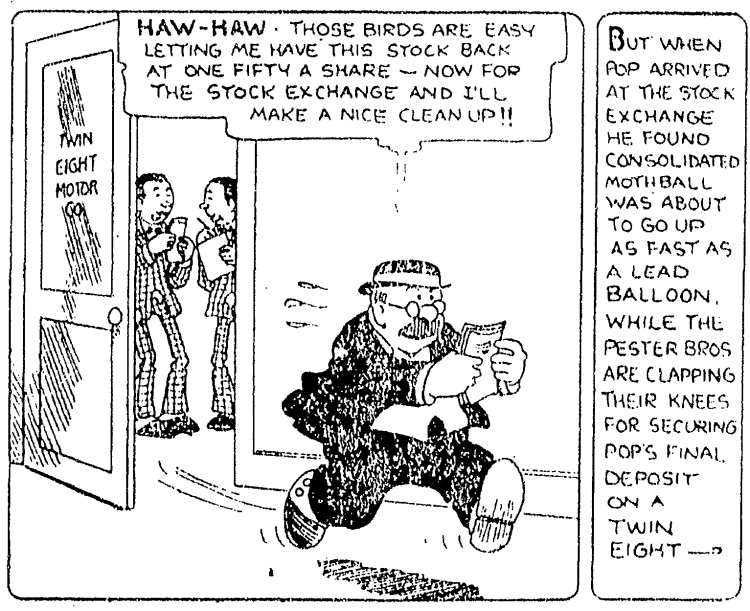
USA, 1933—a failure, an unsuccessful venture—especially used of suggestions, jokes, etc., made in public—the image is of a balloon made of lead plummeting to the ground
Read More
“ad fontes!”
USA, 1933—a failure, an unsuccessful venture—especially used of suggestions, jokes, etc., made in public—the image is of a balloon made of lead plummeting to the ground
Read MoreUSA, 1837—to make assumptions about someone or something based on appearance or on superficial characteristics—the metaphor occurs in the preface to ‘Truth in Fiction: Or, Morality in Masquerade. A Collection of Two hundred twenty five Select Fables of Æsop, and other Authors’ (London, 1708), by Edmund Arwaker
Read Morean artist or writer who produces what is considered to be inferior work simply to earn a living—loan translation from German ‘Brotkünstler’—first used in 1827 by Scottish historian and political philosopher Thomas Carlyle in a text about German literature
Read MoreUSA—‘wishful thinking’, 1915: thinking in which one, consciously or unconsciously, interprets facts as one would like them to be rather than as they really are—‘wishful thinker’, 1917: a person who, consciously or unconsciously, interprets facts as he or she would like them to be rather than as they really are
Read MoreUSA, 1911—used to express the belief that everyone should have access not only to basic sustenance, but also to the finer things in life, such as education, art, literature, etc.—adapted from ‘Bread for all, and Roses too’ (1911), a slogan in the fight for women’s rights
Read More1804—used to express resignation regarding an undesirable aspect of the behaviour of a girl or young woman, as being supposedly characteristic of her age or sex
Read More1721—used to express resignation regarding an undesirable aspect of the behaviour of a boy or young man, as being supposedly characteristic of his age or sex
Read MoreUSA, 1856—to ask someone young, ill-equipped or inexperienced to do difficult or complicated work—this phrase usually occurs in negative contexts, especially as ‘never send a boy to do a man’s work’
Read MoreBritish, 1907—denotes considerable talent or ability to grow plants—in this phrase, the adjective ‘green’ refers to the colour of growing vegetation—1921: ‘green-thumbed’ (adjective)
Read MoreBritish, 1906—denotes considerable talent or ability to grow plants—in this phrase, the adjective ‘green’ refers to the colour of growing vegetation—1914: ‘green-fingered’ (adjective)
Read More word histories