‘bag of hammers’: meanings and origin
American English, 1874—used in particular of stupidity, as in ‘dumb as a bag of hammers’ and variants—the underlying notion is probably that anything is dumb that does all the hard work
Read More
“ad fontes!”
American English, 1874—used in particular of stupidity, as in ‘dumb as a bag of hammers’ and variants—the underlying notion is probably that anything is dumb that does all the hard work
Read Morethe principle that, where an effective legal system is absent or does not apply, brute strength and self-interested ruthlessness are what determine success, ownership, etc.—USA, 1878—predates Kipling’s Jungle book
Read MoreUSA, 1977—petroleum, and any liquid derived from petroleum used in a vehicle powered by an internal-combustion engine—perhaps from popular association of ‘dinosaur’ with ‘fossil fuel’
Read More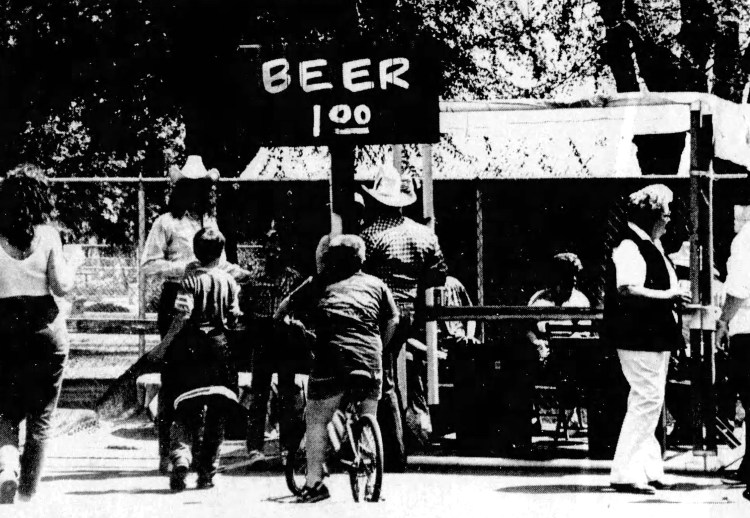
a time at which it is considered acceptable or sociable to start drinking beer—used of various times of the day—USA, 1910
Read MoreUK, late 1980s—the adverb ‘o’clock’ is colloquially and humorously used with adjectives to denote an unreasonably, excessively or inconveniently early or late hour—as in ‘stupid o’clock’, ‘silly o’clock’, etc.
Read More
USA, 2001—a glamorous grandmother, especially one who is relatively young or fashion-conscious—a blend of the nouns ‘glamour’ and ‘grandma’
Read Moreone’s feet as a means of travel, humorously represented as a form of public transport—from 1887 onwards in the southeastern states of Georgia and Alabama
Read MoreUSA, 1882—one’s boots or feet as a means of travel, humorously represented as a form of public transport—refers to boots with hobnails inserted into the soles
Read MoreUSA, early 1930s—adjectives—‘little-girl-lost’: resembling (that of) a small girl who has lost her way—‘little-boy-lost’: resembling (that of) a small boy who has lost his way
Read MoreBritain, 1782—to evoke or recreate a previous time, state or condition; to make it seem as if no time has passed
Read More word histories