Canada and UK, 1978—to publicly disclose perceived wrongdoing or failure on the part of a person or institution; to expose private behaviour to public censure—earlier longer phrases include ‘blame’
UK, 1890—used to indicate that the person or persons guilty of a misdemeanour will not be named, in order to spare them recrimination—‘pack drill’: a military punishment involving a lengthy period of marching up and down carrying full equipment
UK and Ireland—used of someone who makes a mistake because of poor eyesight—refers to the British optical retail chain Specsavers Optical Group Ltd, in particular to its advertising slogan, ‘should’ve gone to Specsavers’
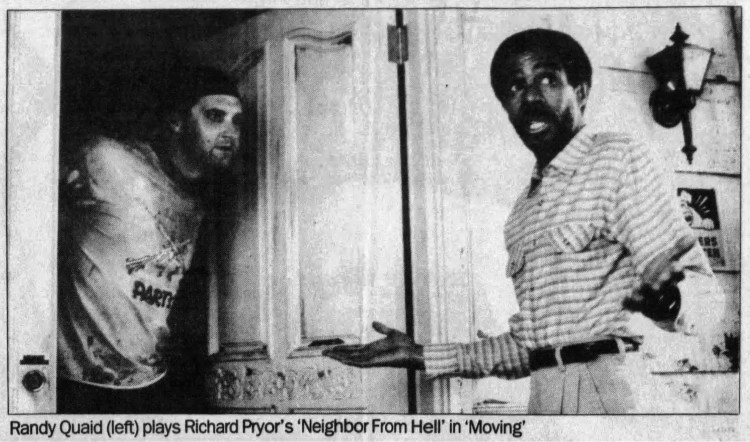
UK, 1993—USA, 1987—the words ‘—— from hell’ are suffixed to nouns often referring to everyday life, such as ‘holidays’ and ‘neighbour(s)’, to make phrases denoting an exceptionally unpleasant or bad example or instance of ‘——’
dismissal from employment—UK, 1882, as ‘the noble order of the boot’—‘the boot’ refers to kicking somebody out—the phrase puns on two acceptations of ‘order’: an authoritative command and an institution founded for the purpose of honouring meritorious conduct
UK, 1864: a naive person who can be manipulated to advance a political agenda—USA, 1948 (1946 as ‘useful innocent’): with reference to a communist strategy designed to gain political power
UK, 1826—a place behind the bony point of the elbow at which a knock results in a sensation of tingling pain—in early use was perhaps partly punning on the homophones ‘humerus’ and ‘humorous’
UK, 1854—to belong to, or to sympathise with, two opposite groups, factions, etc.—probably a loan translation from French ‘avoir un pied dans les deux camps’ (1843)
1613—used hyperbolically of any impressive object, etc.—also applied ironically to a self-satisfied or arrogant person—refers to the seven wonders of the world, i.e., the seven most spectacular man-made structures of the ancient world
UK, 1710—in a situation in which any action one takes will have adverse consequences—‘cleft’, past participle of the verb ‘cleave’, means ‘split in two to a certain depth’—the image is of one being squeezed between the stick’s prongs