‘hell’s delight’: meaning and early occurrences
early 19th century—pandemonium, great trouble or difficulty—often in ‘to kick up hell’s delight’, meaning: to cause a great deal of trouble or difficulty
Read More
“ad fontes!”
early 19th century—pandemonium, great trouble or difficulty—often in ‘to kick up hell’s delight’, meaning: to cause a great deal of trouble or difficulty
Read More1933—a generally accepted notion or opinion—borrowed from French ‘idée reçue’ (i.e., ‘received idea’)—originally with reference to ‘Dictionnaire des idées reçues’, by Gustave Flaubert
Read Morerefers to a person who is ignorant or dismissive of the hardships of others—alludes to the phrase “let them eat cake”, attributed to Marie Antoinette, wife of King of France Louis XVI
Read Moreis used of a place that is found inexplicably deserted; also of a person’s sudden and inexplicable disappearance—alludes to the Mary Celeste, a U.S. cargo ship which in December 1872 was found mysteriously abandoned in the North Atlantic
Read More(UK, 1775): a dance blindfold among eggs—hence, figuratively (UK, 1856): an intricate and difficult task—also used as a verb
Read Moreto promote somebody to an ostensibly higher position where they will be out of the way and less influential—jocular variant of ‘to kick somebody downstairs’, meaning to eject somebody
Read Morea social occasion where the host gets drunk at an earlier time than the guests—1682?—one of several expressions in which the adjective ‘Dutch’ is used derogatorily or derisively
Read Morein reference to a group of people: a self-centred attitude (corresponding to ‘egotism’ in an individual)—UK, 1819—from the Latin pronoun of the first person plural ‘nōs’ and the suffix ‘‑ism’ (after ‘egotism’)
Read More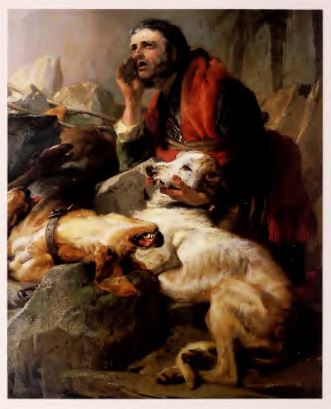
an assertion of continuing competence, strength, etc., notwithstanding evidence to the contrary—from the title of a painting by the British artist Edwin Landseer, first exhibited in 1838
Read More1910—a humorous phonetic transcription of the phrase “goes into”, as originally used at school in arithmetic lessons (as in “4 guzinter 8 two times”)—hence, by extension: a schoolteacher
Read More word histories