‘twelve good men and true’: meaning and origin
a jury in a lawcourt—17th century—but the selection of twelve good men and true to form a jury was mentioned in the 16th century
Read More
“ad fontes!”
a jury in a lawcourt—17th century—but the selection of twelve good men and true to form a jury was mentioned in the 16th century
Read Moreabsenteeism among police officers (and by extension other workers) who claim to be ill but are in fact absent to support union contract demands or negotiations—USA, 1967—alludes to the traditional colour of police uniforms
Read Moretwo different people or things are totally incompatible—1901—alludes to “East is East and West is West, and never the twain shall meet” in Ballad of East and West (1892), by Rudyard Kipling
Read Morea long-awaited sign that a period of hardship or adversity is nearing an end—UK, 1862—the image is of a railway tunnel, and the phrase has been used literally
Read MoreUK, 1909—parliamentary procedure: a form of closure by which the chair or speaker selects certain amendments for discussion and excludes others—based on the image of a kangaroo leaping over obstacles
Read More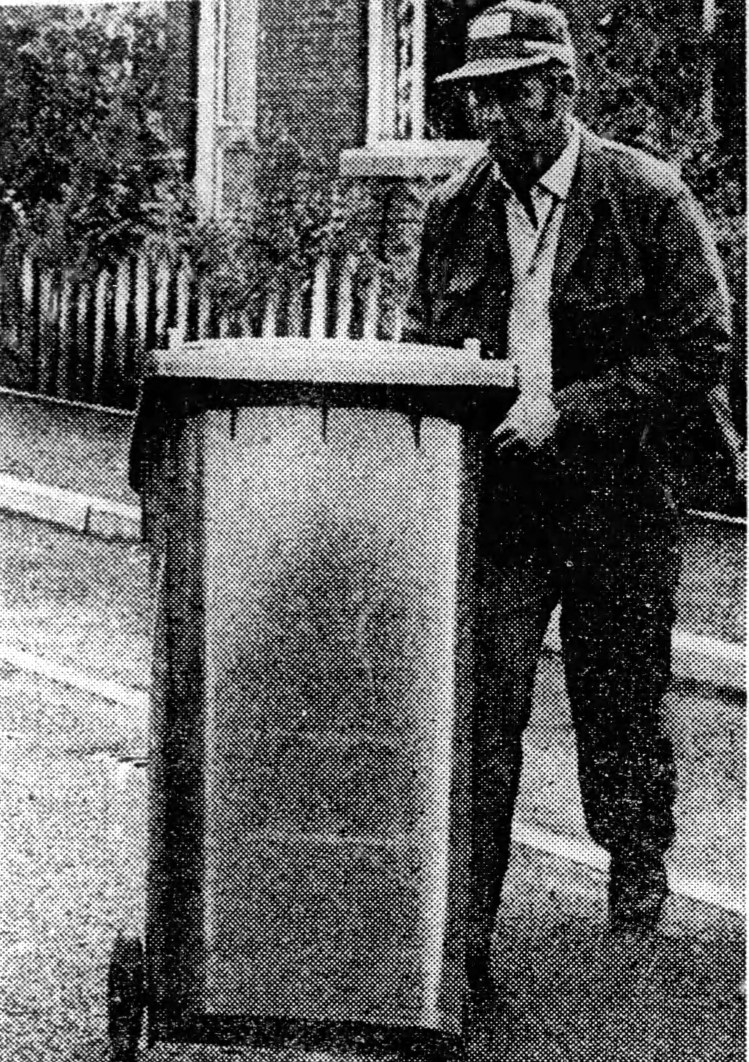
UK, 1983—a large, rectangular dustbin with a hinged lid and wheels on two of the corners—bins on wheels were introduced into the United Kingdom in 1980 on the model of what was done in the Federal Republic of Germany
Read Moreto vomit from drunkenness—U.S. students’ slang, 1980—likens the position of the hands of a person holding onto the sides of a toilet bowl while vomiting therein, to that of a bus driver’s hands holding the steering wheel
Read Moreirresponsible or unfounded optimism—1857, apparently coined by Charles Dickens—refers to Wilkins Micawber, a character in Dickens’s novel David Copperfield (1850)
Read Morethe Jerusalem artichoke—UK, 1968—blend of ‘fart’ and ‘artichoke’ in ‘Jerusalem artichoke’—refers to the flatulence caused by eating Jerusalem artichokes
Read MoreUK, 1944—the slogan of the Boy Scout Association’s effort to raise money for funds by doing jobs, originally at a shilling a time
Read More
