a difficult, uncooperative or unsociable person—UK, 1829—from French ‘mauvais coucheur’, literally ‘bad bedfellow’, with original allusion to a person whom a traveller had to share a bed with when stopping over at an inn
UK, 1856—jocular extension of ‘to rain cats and dogs’ (i.e., ‘to rain very hard’)—puns on the verb ‘hail’ (i.e., ‘to pour down like hail’) and the verb ‘hail’ (i.e., ‘to call out (a cab)’)
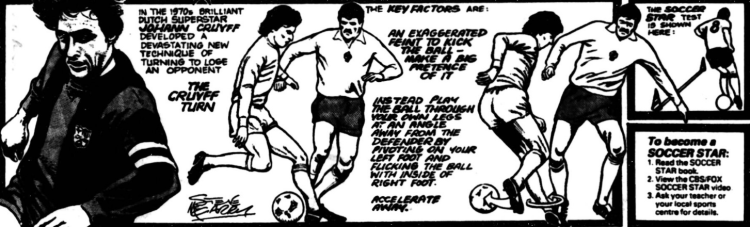
in soccer: a manoeuvre used by one player to evade another—UK, 1980s—refers to Dutch footballer Johan Cruyff, who first brought this manoeuvre to public attention by performing it in 1974
an event or occasion at which the expected principal participant is not present—coined after ‘Hamlet without the Prince’—‘Lear without the King’ 1904—‘Henry V without the King’ 1964
UK, 1999—refers to ‘Waiting for Godot’, a play by Samuel Beckett—absurd phrase, since the titular character never appears in the play—always occurs in association with the phrase ‘Hamlet without the Prince’
USA, 1981—said to have been invented by cheerleader ‘Krazy George’—popularised worldwide during the 1986 FIFA World Cup in Mexico, as a translation of Spanish ‘ola’—hence the British phrase ‘Mexican wave’ (1986)
also ‘more than meets the ear’—meaning: more significance or complexity than is at first apparent—first used by John Milton as ‘more is meant than meets the ear’ in Il Penseroso (1645)
(literally) to sit at a table; (figuratively) to establish oneself firmly in a situation—‘to put one’s feet under the same table with somebody’: (literally) to sit at a table with somebody; (figuratively) to associate oneself with somebody
every contribution towards a goal is valuable, regardless of how small it may be—UK, 1707—in Britain, particularly associated with Tesco, which has used this phrase as its slogan since 1993
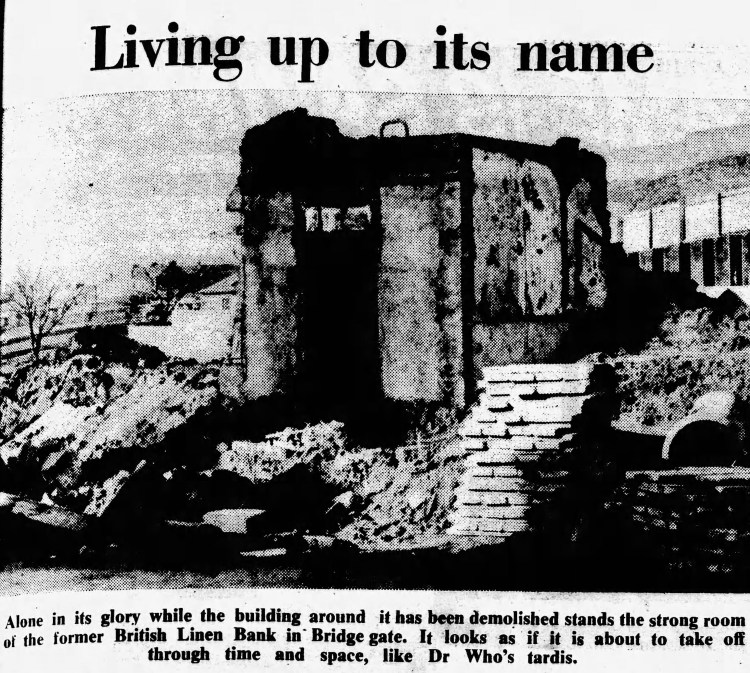
various meanings, in particular: something with a larger capacity than its outward appearance suggests—UK, 1968—the name, in TV series Doctor Who, of a time machine outwardly resembling a police telephone box, yet inwardly much larger

 word histories