the informal British phrase ‘(as) sick as a parrot’
meaning: ‘thoroughly dejected or disappointed’—appeared (1973) in Tyne and Wear (north-eastern England)—originated apparently in football parlance, in which it soon became a cliché
Read More
“ad fontes!”
meaning: ‘thoroughly dejected or disappointed’—appeared (1973) in Tyne and Wear (north-eastern England)—originated apparently in football parlance, in which it soon became a cliché
Read MoreUK, 1857—characterised by savage violence or merciless competition—from Alfred Tennyson’s poem ‘In Memoriam’ (1850), in which ‘red in tooth and claw’ refers to Nature’s brutality
Read MoreUK, 1835—mischievous or deceitful behaviour—alludes to the proverbial playfulness of monkeys—probably modelled on Bengali ‘bãdrāmi’; cf. modern Sanskrit ‘vānara-karman’, from ‘vānara’ (monkey) and ‘karman’ (action, work, employment)
Read More‘the milk in the coconut’: a puzzling fact or circumstance; alludes to the question of how the milk got into the coconut—of British-English origin (1832), not of American-English origin as stated by the Oxford English Dictionary
Read Moreoriginally: a child wearing the house key tied around their neck and staying in the streets while their mother is at work—USA, 1935: a poor Afro-American woman’s child—USA & UK, WWII: a child whose mother was engaged in war industry
Read MoreUK, 1832—‘the awkward age’: the adolescence, when one is no longer a child but not yet properly grown up, a time of life characterised by physical and emotional changes—translates in French as ‘l’âge ingrat’, ‘the thankless age’
Read Morefrom the notion that even a dead cat will bounce if dropped from a sufficient height—UK, 1981: a rapid fall in the stock market with hardly any reaction—USA, 1985: a rapid but short-lived recovery in the stock market after a sharp fall—hence, 1992: any spurious success
Read More‘a stiff upper lip’: a quality of uncomplaining stoicism—now understood as referring to what is believed to be a quintessentially British trait, the repression of emotion, but originated in fact in North America (USA, 1811)
Read More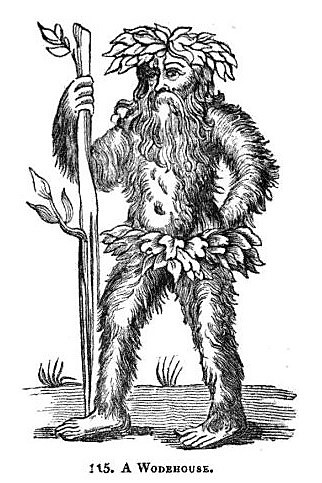
three meanings: 1/ in outdoor pageants: a man dressed in greenery, representing a wild man of the woods—2/ in inn names and signs: a forester—3/ in medieval English churches: a representation of a man’s face composed of, surrounded by, or sprouting foliage or branches
Read MoreUK, 1945—‘demob happy’: feeling elated in anticipation of demobilisation from the armed forces—hence: in anticipation of the end of a job, assignment, etc.—in extended use: in anticipation of the end of any onerous or unpleasant period
Read More word histories