‘papyrocracy’: meanings and origin
originally (1830): the rule, or the power, of paper money (as opposed to metallic currency)—later also (1940): the rule, or the power, of bureaucracy
Read More
“ad fontes!”
originally (1830): the rule, or the power, of paper money (as opposed to metallic currency)—later also (1940): the rule, or the power, of bureaucracy
Read More(intransitive): to spend the summer—UK, 1797, in the following title: The Sea Side, a Poem, in a Series of familiar Epistles, from Mr. Simkin Slenderwit, summerising at Ramsgate, to his dear Mother in Town
Read Morevery boring or unexciting—‘(as) dull as ditchwater’ (1770)—the later phrase ‘(as) dull as dishwater’ (1832) is probably due to mispronunciation of ‘ditchwater’ in the original phrase
Read Moreto describe or portray someone or something in very general terms, avoiding or neglecting the finer details—UK, 1808—alludes to a style of painting characterised by the use of broad brushstrokes
Read More
a Japanese figurine of a sitting cat beckoning with one raised paw, traditionally believed to bring good luck—USA, 1894—from Japanese ‘maneku’ (to invite by beckoning, especially with the hand) and ‘neko’ (a cat)
Read Morea perceived loss of intelligence or critical thinking skills—apparently coined after ‘potato rot’ by the U.S. author Henry David Thoreau in Walden; Or, Life in the Woods (1854)
Read Moresubsistence-level living—UK, 1833—since the 17th century, ‘bread and cheese’ has been used attributively to mean: ordinary, simple, basic
Read More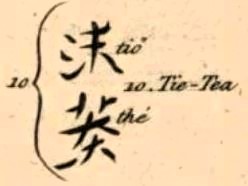
a fine kind of green tea, each leaf of which is rolled up into a pellet—UK, 1767—refers to the resemblance of the pellets to granules of gunpowder
Read Morea navigable river or canal—UK, 1841—originally and chiefly used of the River Thames
Read MoreUK, 1832—consolation taken from the fact that a bad situation is not worse than it is—one of several expressions in which the adjective ‘Dutch’ is used derogatorily or derisively
Read More word histories