‘to live in each other’s pockets’: meaning and early occurrences
to live in excessively close proximity or interdependence—1762: “the company squeezed themselves into one another’s pockets” in a letter by Horace Walpole
Read More
“ad fontes!”
to live in excessively close proximity or interdependence—1762: “the company squeezed themselves into one another’s pockets” in a letter by Horace Walpole
Read MoreUK, 1904—refers to the action of making someone stop chattering—from the colloquial imperative phrase ‘cut the cackle (and come to the horses)’, meaning: stop talking (and get to the heart of the matter)
Read MoreUSA, 1888—at variance/in line with the (likely) thought, practice or judgement of the future; at odds/coincident with how commentators view (or are likely to view) an issue or action retrospectively
Read MoreUK, 1866, sailors’ slang: a straw mattress—Australia, 1884: a straw hat—in reference to donkeys’ diet
Read MoreU.S. slang, 1986—a march into or out of a police car, courthouse, etc., that a person in police custody is made to perform for the benefit of the news media—‘perp’: shortening of ‘perpetrator’
Read MoreUK, 1822—a vituperative gossip, a scandalmonger; an evil or malicious tongue—a borrowing from French ‘mauvaise langue’ (literally ‘bad tongue’) of same significations
Read More1687—a lengthy and tedious reprimand—from the verb ‘job’ (1666), meaning: to reprimand in a long and tedious harangue—with allusion to the lengthy reproofs addressed to Job by his friends in the Book of Job
Read Morelate 18th century, in the context of piracy: to walk along a plank placed over the side of a ship until one falls into the sea—hence, figuratively, early 19th century: to be forced to resign from one’s office or position
Read More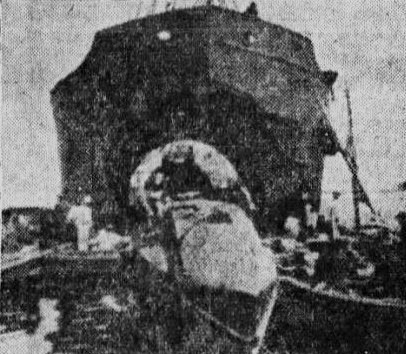
1910s—a ship designed to carry submarines—likens the submarines carried in such ships to the immature young nursed in the abdominal pouch of female kangaroos
Read Morea game in which players must obey a leader’s instructions if, but only if, they are prefaced with the words ‘O’Grady says’—UK, 1917—game invented during World War One as a play-way for conducting physical exercises and drill in the British Army
Read More
