‘conspicuous by one’s/its absence’: meaning and origin
UK, 1847—obviously not present where one/it should be—popularised in 1859 by the British statesman John Russell—alludes to the Annals, Book III, 76, by the Roman historian Tacitus
Read More
“ad fontes!”
UK, 1847—obviously not present where one/it should be—popularised in 1859 by the British statesman John Russell—alludes to the Annals, Book III, 76, by the Roman historian Tacitus
Read More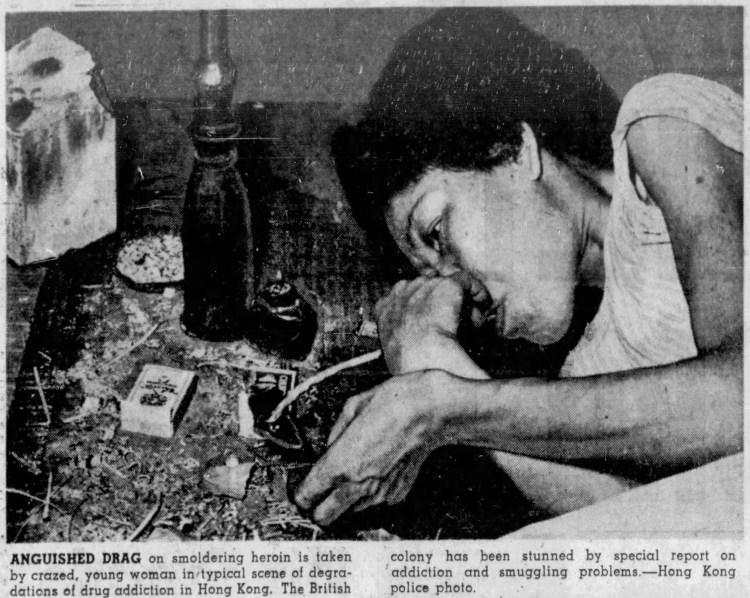
to take heroin by heating it and inhaling the fumes, which form a pattern resembling the tail of a dragon—originated in Hong Kong in the 1950s as a translation of Cantonese slang ‘chui lung’, ‘dragon chasing’
Read MoreUSA—1940: a policy of non-acceptance with regard to a specified situation, activity, result, substance, etc.—1971: a policy of non-acceptance with regard to abusive, anti-social or criminal behaviour, especially the use of illegal drugs
Read More
UK, 1822—of a member of parliament: to join the party opposed to one’s present party—also to vote against one’s own party; to change sides on an issue—from the practice whereby a member of parliament literally crosses the floor to join another party
Read MoreUK, 1836—a person, country, etc., that appears powerful or threatening but is actually weak or ineffective—from Chinese ‘zhǐlǎohǔ’ (‘zhǐ’, paper, ‘lǎohǔ’, tiger)—used in the post-war years by the Chinese Communist Party of the USA and other reactionaries
Read More1909 to 1923 in stories by English author P. G. Wodehouse—a facetious appellation for a home or hospital for people with mental illnesses—‘loony’: shortened form of ‘lunatic’
Read MoreUSA, 1889—when a situation reaches a critical point and one must commit oneself to an action or decision—the image is of having to shove when mere pushing is ineffective
Read MoreAustralia, 1863—originally referred to any chain of communications by which bushrangers were warned of police movements—soon extended to any rapid informal network by which information, rumour, gossip, etc., is spread
Read MoreUK, 1808—to make one’s beliefs or intentions plain—from the former practice of nailing an ensign to the mast of a ship, after damage during battle resulted in the ship’s colours no longer being clearly displayed, which otherwise might have been interpreted as a signal of surrender
Read MoreUSA, 1917—a method of treating a drug addict by sudden and complete withdrawal of the drug, instead of by a gradual process—alludes to the goose pimples, resembling the skin of a cold turkey, that a person experiences as a side effect of the treatment
Read More word histories