‘dry as a Pommy’s towel’: meaning and origin
Australia, 1981—very dry—alludes to the alleged poor personal hygiene of the British—here, the Australian noun ‘Pommy’ designates a British person
Read More
“ad fontes!”
Australia, 1981—very dry—alludes to the alleged poor personal hygiene of the British—here, the Australian noun ‘Pommy’ designates a British person
Read More1950—‘grasshopper’ and its shortened form ‘grassy’, typically used in the plural, denote a tourist, especially a visitor to Canberra—the image is that a coachload of tourists is similar to a swarm of grasshoppers
Read MoreUK, 1830—a happy or positive attitude that fails to notice negative things, leading to a view of life that is not realistic
Read Moreto surpass everything—Ireland, 1821—probably refers to a strong military fort at Banagher, a town in County Offaly, in the province of Leinster, Ireland
Read Morethe very, the real, or the proper person or thing—1830—of Scottish or Irish origin—perhaps an extended form of the synonymous phrase ‘the potato’
Read MoreChina, 1849—extortion—from ‘squeeze’, denoting a forced exaction or impost made by a Chinese official or servant, and ‘pidgin’ in its original sense of business
Read MoreUK, 1857—This phrase was originally used by children to express or encourage an attitude of indifference to taunts, insults or other verbal abuse.
Read MoreUK, 19th century—‘red on the map’: the colonies and dominions of the British Empire—‘to paint the map red’: to expand the territory of the British Empire—from the colour used to represent British colonies and dominions on maps
Read More
UK, 1914—snobbish or supercilious—refers perhaps to ‘toff’, denoting a fashionable upper-class person—the image is perhaps of someone who, considering themself superior, keeps their nose high in contempt for the lower classes—cf. the form ‘toffy-nosed’ (1919)
Read More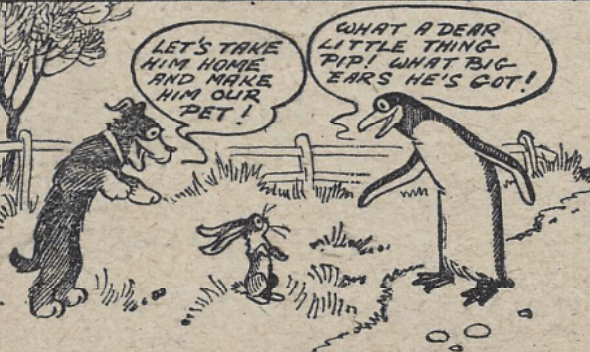
UK, 1920—a group of three objects or persons—alludes to Pip, Squeak and Wilfred, a trio of animal characters featured in a children’s comic strip published in The Daily Mirror (London) from 1919 onwards
Read More
