‘gyppy tummy’: meaning and origin
diarrhoea suffered by travellers, especially in Egypt—1915, British Army—the word ‘gyppy’ is from ‘gyp’ in ‘Egyptian’, and the suffix ‘-y’, used to form familiar diminutives
Read More
“ad fontes!”
diarrhoea suffered by travellers, especially in Egypt—1915, British Army—the word ‘gyppy’ is from ‘gyp’ in ‘Egyptian’, and the suffix ‘-y’, used to form familiar diminutives
Read MoreUK, 1972—the nouns ‘granny-bashing’ and ‘granny-battering’ denote: a) the assault or mugging of elderly persons; b) abuse of an elderly member of one’s family, especially one’s grandmother
Read More
‘Aunt’ (1842) and ‘Granny’ (1851)—nicknames for The Sydney Morning Herald (Sydney, New South Wales), with reference to its conservativism—‘Granny’ has come to be used affectionately
Read Moreused of a person who is incapable of organising the simplest event, task, etc.—Australian politics, 1945, as a comment on Robert Gordon Menzies, generally ascribed to William Morris Hughes
Read MoreAustralia—‘charity dame’ 1949—‘charity moll’ 1962—an amateur prostitute who charges less than the usual rate—from ‘Moll’, pet form of the female forename ‘Mary’, the noun ‘moll’ has long been used to designate a prostitute
Read MoreUSA, 1825—the phrases that are built on the pattern ‘(as) [adjective] as a meat-ax(e)’ intensify the meaning of the adjective—this adjective can be ‘savage’, ‘wicked’, or ‘mad’
Read Moremeans ‘backwards’, also ‘reluctantly’—USA, 1865—of unknown origin—allegedly borrowed from Irish English, but nothing seems to support this allegation
Read More
Australia, 1954—derogatory nickname for the metal eagle at the top of the Australian-American Memorial in Canberra—alludes to the fact that, from a distance, the eagle’s upswept wings look like a rabbit’s ears
Read More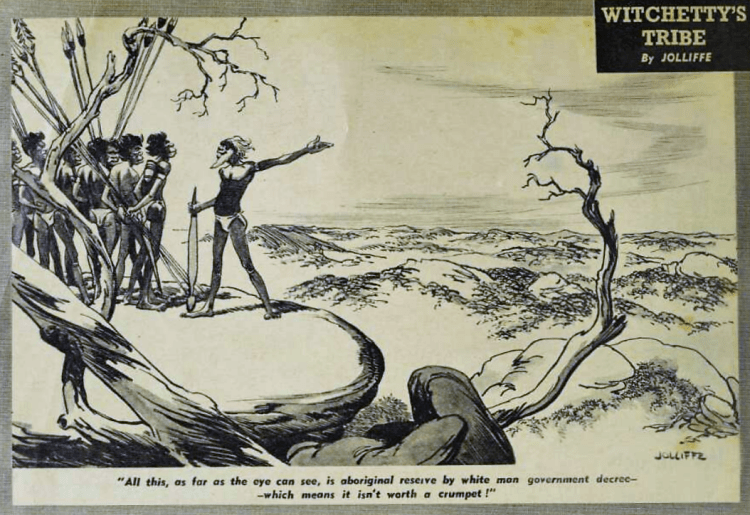
Australia, 1944—utterly worthless—one of the phrases built on the pattern ‘not worth a —’, such as ‘not worth a tinker’s curse’
Read More1942—an arena of fierce or ruthless rivalry—borrowed from French: literally ‘basket of crabs’—the image is of crabs fighting, if not devouring one another, when kept in a basket
Read More
