Australia, 1914—to leave indisputable evidence of one’s involvement in an affair, endeavour, etc.—‘fingerprint’: an impression made on a surface by the tip of a person’s finger, as used in criminal investigations
New Zealand, 1985—adjective—a general term of approval, meaning: excellent, fantastic, great—frequently used as an interjection expressing emphatic affirmation, agreement or appreciation
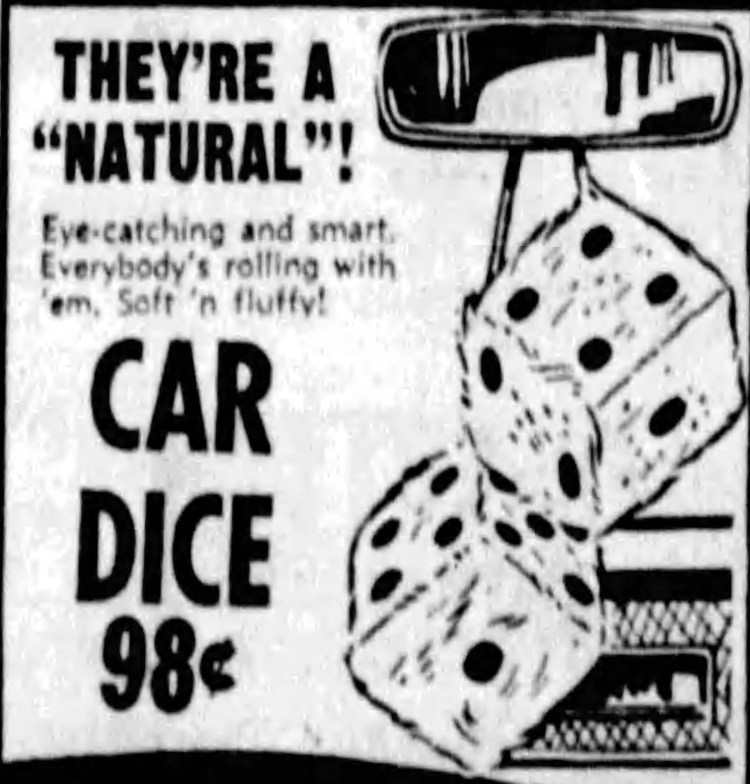
California, 1956—a pair of large imitation dice made from fluffy, fur-like material, designed to be hung inside a vehicle’s windscreen from the rear-view mirror
something likened to the RMS Titanic in being vast and supposedly indestructible yet heading inevitably towards disaster—USA & Australia, May 1912, in the phrase ‘political Titanic’
to engage in pointless or futile activity in the face of disaster—USA, 1969—apparently first used, and perhaps coined, by Elizabeth Carpenter, press secretary for the wife of President Lyndon B. Johnson
USA 1920: ‘to have the brains of a goldfish’ (to have limited intelligence)—USA, 1958: ‘to have the memory of a goldfish’ (to be unable to retain information or memories for any significant length of time)
American English, 1874—used in particular of stupidity, as in ‘dumb as a bag of hammers’ and variants—the underlying notion is probably that anything is dumb that does all the hard work

 word histories