used of a person who is frozen with fright or surprise, or is trying to flee, as a result of suddenly becoming the focus of attention—alludes to the habit of deer and rabbits of stopping still when dazzled by the headlights of a motor vehicle, or of running away within the headlight beam
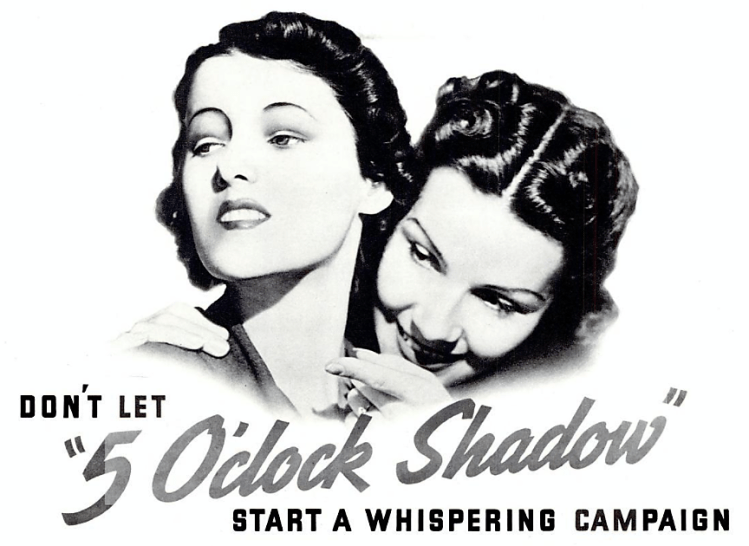
the beard growth which becomes visible in the late afternoon on the face of a man who has shaved earlier in the day—originally (USA, 1937) the catchline of an advertising campaign for Gem Micromatic Razor and Blades
‘Auntie’: familiarly used to denote a publication, an institution, etc., which is considered to be conservative or staid in style or outlook, or, alternatively, which is viewed with affection—especially applied, in Britain, to the London newspaper The Times and to the BBC
a pal, a mate, a good friend—Ireland, 1917—perhaps an anglicised form of Irish ‘Seo Dhuitse’ (‘Here you are’) or perhaps an anglicised form of French ‘Mon cher gosse’ (‘My dear child’)
Australia, 1972—a person, usually a man, who, in spite of a superficial smartness, is untrustworthy—‘rat’ refers to a deceitful or disloyal man—the image is that, despite the gold tooth, a rat’s basic nature cannot change
informal and often humorous: denotes the explicit or most intimate details of something—originally (USA, 1859) referred to accounts or representations of acts of violence and bloodshed
USA, 1856—to ask someone young, ill-equipped or inexperienced to do difficult or complicated work—this phrase usually occurs in negative contexts, especially as ‘never send a boy to do a man’s work’
USA, 1901—wonderfully stylish, elegant or fashionable—a blend of ‘swell’ and ‘elegant’—popularised by its use in the song Well, Did You Evah!, interpreted by Bing Crosby and Frank Sinatra in the 1956 film High Society

 word histories