a picture conveys far more than words—USA, 1877, as ‘a picture tells more than printed words’—from 1866 to 1876 the notion had been used with specific reference to pictures by the cartoonist Thomas Nast
UK, 1794—expresses one’s strong and often petulant inclination to do a particular thing—here, ‘pin’ (i.e., a small, thin, pointed piece of metal) is used of the most trivial or least significant thing
dishonest or deceitful actions, while they may offer a short-term advantage, do not lead to long-term success or well-being—1710, as ‘cheating never thrives’
UK, 1883—to stay at a hotel, inn, etc., that provides a bed for the night and breakfast the following morning—to stay at an establishment known as a ‘bed and breakfast’
inflammation of the bursa over the kneecap (prepatellar bursa), typically induced by kneeling on hard floors—UK, from 1824 onwards in medical publications
early 19th century—chiefly U.S.—to be forced by another to walk on tiptoe—to walk cautiously—to be discharged or dismissed—to discharge or dismiss (someone)—origin unknown
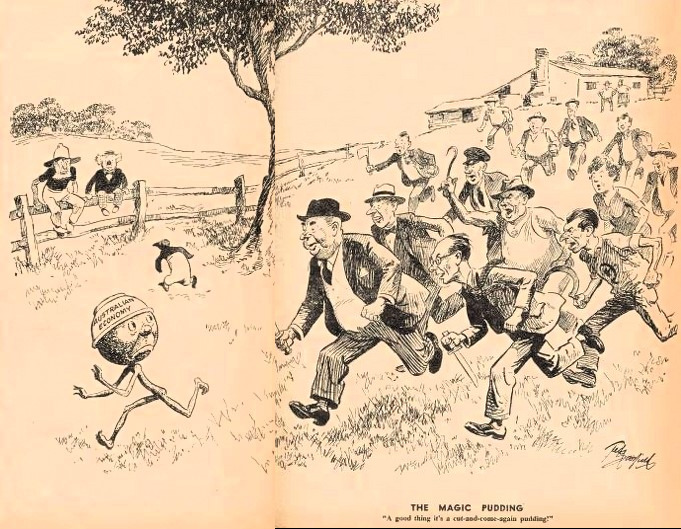
Australia, 1934—an inexhaustible supply of something, especially money—alludes to The Magic Pudding (1918), by Norman Lindsay, in which a pudding instantly renews itself as it is sliced or eaten into

 word histories