history of ‘come up and see my etchings’
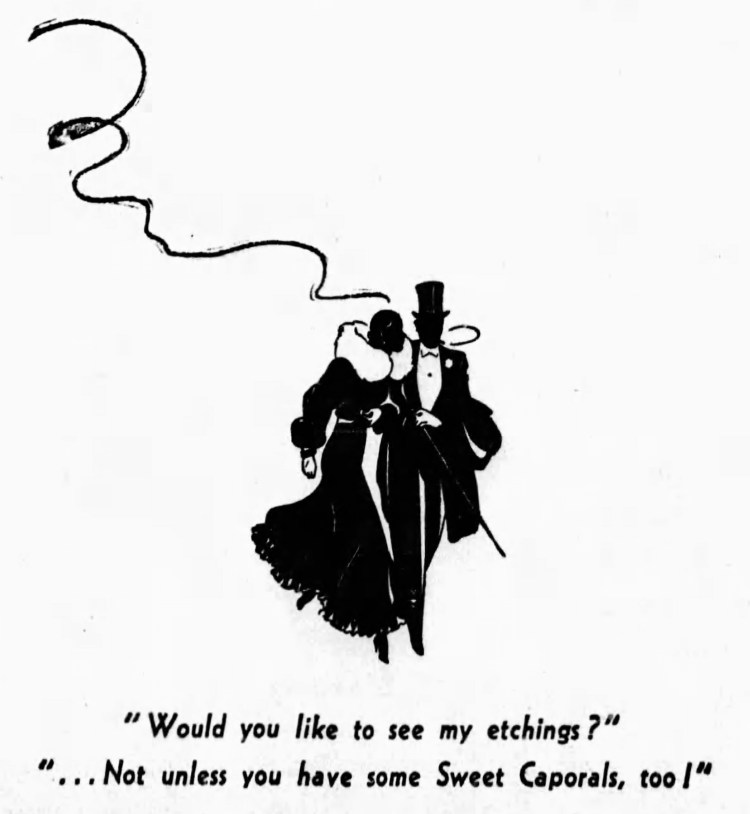
USA, early 20th century—used as an invitation to sexual dalliance—in 1937, William Hays’s censorship office apparently banned it in cinema films
Read More
“ad fontes!”
USA, early 20th century—used as an invitation to sexual dalliance—in 1937, William Hays’s censorship office apparently banned it in cinema films
Read More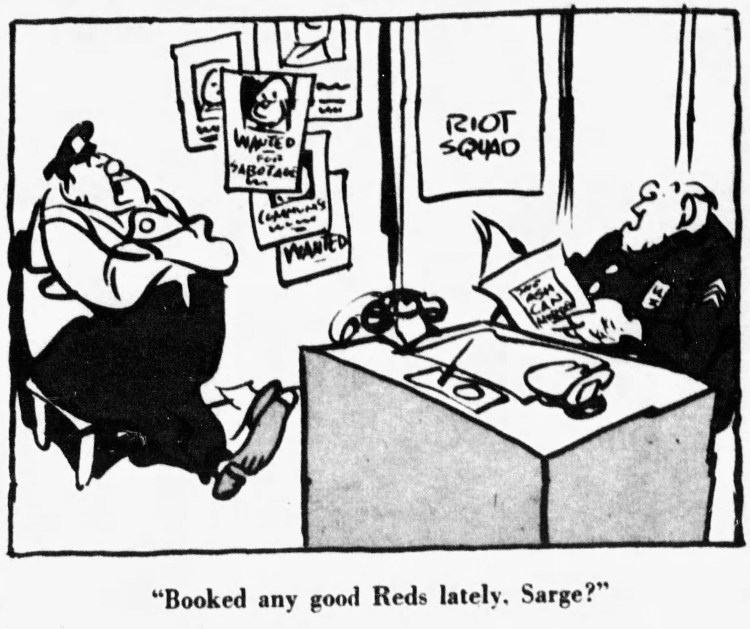
USA, 1941—jocular alteration of the conversational gambit ‘read any good books lately?’ with reference to the investigations into alleged Communist activity
Read More
accept that fact if you can—1820: Irish English and associated with the obsolete figurative sense ‘to consider’ of the verb ‘smoke’
Read More
used of images suggestive of real or imaginary events—UK and USA early 1900s: popularised by its use as an advertising slogan for Doan’s Backache Kidney Pills
Read MoreUSA, 1984—used to indicate that something is blatantly obvious—humorously from ‘Is the Pope Catholic?’ and ‘Does a bear shit in the woods?’
Read More
USA—used ironically as a response to a question or statement felt to be blatantly obvious—from 1959 onwards as ‘Does a bear live in the woods?’ and variants
Read More
USA, 1902—jocularly used to justify the necessity of taking another alcoholic drink—Irish variant (1947): ‘a bird never flew on one wing’
Read More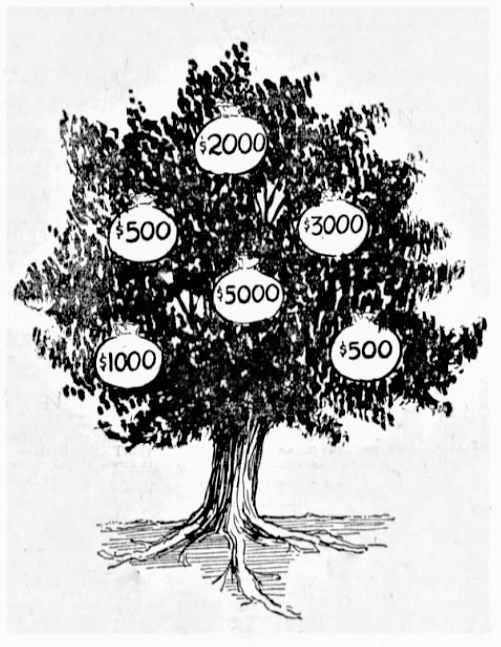
‘money tree’ (UK, 1749): a source of easily obtained or unlimited money—‘to shake the money tree’ (UK, 1851)—related to proverb ‘money does not grow on trees’
Read MoreUSA, 1926—only a person with a given personality, characteristic, etc., is able to identify that quality in someone else—particularly used of homosexuals
Read More
said as a jest after the departure of a person or persons regarded as untrustworthy—apparently coined by the English lexicographer Samuel Johnson (1709-1784)
Read More word histories