‘nosism’: meaning and origin
in reference to a group of people: a self-centred attitude (corresponding to ‘egotism’ in an individual)—UK, 1819—from the Latin pronoun of the first person plural ‘nōs’ and the suffix ‘‑ism’ (after ‘egotism’)
Read More
“ad fontes!”
in reference to a group of people: a self-centred attitude (corresponding to ‘egotism’ in an individual)—UK, 1819—from the Latin pronoun of the first person plural ‘nōs’ and the suffix ‘‑ism’ (after ‘egotism’)
Read More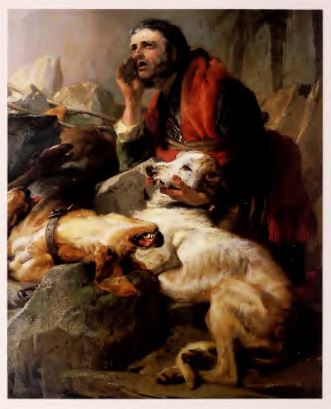
an assertion of continuing competence, strength, etc., notwithstanding evidence to the contrary—from the title of a painting by the British artist Edwin Landseer, first exhibited in 1838
Read MoreAustralian slang, 1988—a very small distance or amount—perhaps intended as a humorous variant of ‘bee’s knee’, used of something small, insignificant or weak
Read MoreUK, 1851—a person (or persons) or a thing (or things) considered unattractive, inferior or unpleasant, compared to others of the same type or group—alludes to Cinderella’s ugly and unpleasant stepsisters in the fairy tale Cinderella
Read Morea person who overestimates their own influence—1661—alludes to the fable of a fly sitting on the axletree of a moving chariot and saying, “See what a dust I raise”
Read Morea person who behaves as if he or she knows everything—UK, colloquial, 1860—the irony of the expression lies in the fact that clogs are mere functional pedestrian objects
Read MoreUK, 1907: ‘to ghostwrite’ (to write a book, an article, etc., for another person, under whose name it is then published—USA, 1908: ‘ghostwriter’ (a person who ghostwrites)
Read MoreBritish, 1771—as an adjective: emaciated; weak and starving—as a noun: an emaciated or starving person
Read Morelooking or feeling ill or nauseated—1843, in a letter by Charles Dickens—when applied to a person, the plural noun ‘gills’ designates the flesh under the jaws and ears; also the cheeks
Read Morea bad-tempered, sullen person—UK, 1981—here, the noun ‘drawers’ means ‘underpants’
Read More word histories