‘not to be able to [verb] for toffee’: meaning and origin
UK, 1886—to be incompetent at performing the action denoted by the verb—the underlying notion is presumably of failing to win even the smallest prize
Read More
“ad fontes!”
UK, 1886—to be incompetent at performing the action denoted by the verb—the underlying notion is presumably of failing to win even the smallest prize
Read More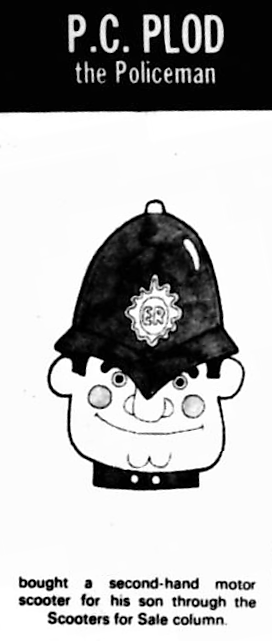
UK, 1963—‘Mr. Plod’, also ‘P.C. Plod’, ‘Plod’: a humorous or mildly derogatory appellation for a policeman or for the police—alludes to ‘Mr. Plod’, the name of the policeman in stories by the English author of children’s fiction Enid Blyton
Read More‘flabbergasted’, ‘astounded’—1925, Lincolnshire and Yorkshire, north-eastern England—in reference to the shock effect of being struck in the mouth, from the noun ‘gob’, denoting ‘the mouth’, and the adjective ‘smacked’, meaning ‘struck’
Read Moreused of a person who is frozen with fright or surprise, or is trying to flee, as a result of suddenly becoming the focus of attention—alludes to the habit of deer and rabbits of stopping still when dazzled by the headlights of a motor vehicle, or of running away within the headlight beam
Read MoreUK (Midlands), 1939—exclamative phrase used to express astonishment or incredulity—the reason that this metaphor was chosen is unknown
Read Moredesignates an Englishman—originated among the French, from the fact that they regarded the exclamation ‘God damn’ as characteristic of the English—the Middle-French synonym ‘godon’ may be etymologically unrelated
Read Moreto refuse to face up to unpleasant or awkward realities—refers to the practice traditionally attributed to the ostrich of thrusting its head into the sand when being overtaken by pursuers, supposedly through an incapacity to distinguish between seeing and being seen
Read More1607, as ‘as snug as pigs in pease-straw’—especially in ‘(as) snug as a bug in a rug’, phrases built on the pattern ‘(as) snug as [animal name] (in —)’ mean ‘in an extremely comfortable position or situation’
Read More1922—‘like death warmed up’ (also ‘like death warmed over’): extended form of ‘like death’, attested in the mid-17th century and meaning ‘extremely ill’, or ‘exhausted’
Read Moremeaning: ‘what is appropriate in one case is also appropriate in the other case in question’—earliest occurrence in A Collection of English Proverbs (1670), by John Ray
Read More
