The phrase caviar to the general is used to denote a good thing unappreciated by the ignorant (here, the general refers to the multitude). It is from The Tragicall Historie of Hamlet, Prince of Denmarke (between 1599 and 1602), by the English poet and playwright William Shakespeare (1564-1616): (Quarto 2, 1604) – Hamlet: Come giue vs a tast of your quality, come […]
The Cheshire cat is now largely identified with the character in Alice’s Adventures in Wonderland (1865), by the English writer Lewis Carroll (Charles Lutwidge Dodgson – 1832-98): “Please would you tell me,” said Alice, a little timidly, for she was not quite sure whether it was good manners for her to speak first, “why your […]
In A Dictionary of the English Language (1755), the English lexicographer Samuel Johnson (1709-84) thus defined bonfire: [from bon, good, French, and fire.] A fire made for some publick cause of triumph or exultation. In support of this etymology, bonfire in several languages is, literally, fire of joy. For example: – French feu de joie – Italian fuoco d’allegrezza – German Freudefeuer – Dutch vreugdevuur. But […]
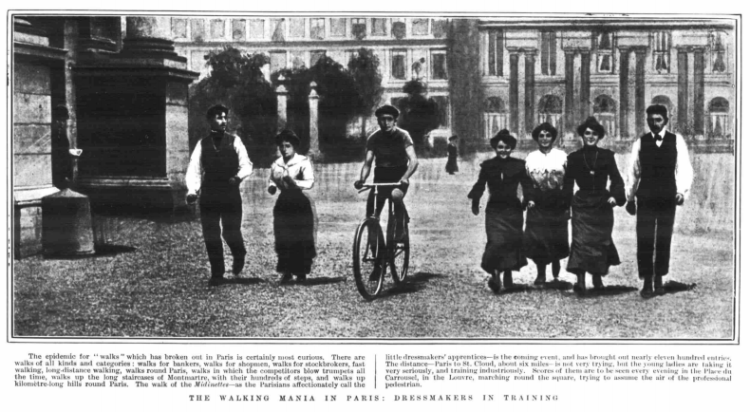
Phonetically and semantically similar to milliner, the French word midinette was defined as “a milliner’s female assistant, especially in Paris” in the 1933 Supplement to the New English Dictionary (as the Oxford English Dictionary was known). However, while milliner literally means a Milanese, a native or inhabitant of Milan, midinette is a portmanteau word, composed […]
A milliner is a person (generally a woman) who makes or sells women’s hats. But a Milliner was originally a native or inhabitant of Milan, a city in northern Italy. The word is first recorded in this sense in an Act of Parliament in 1449: That every Venician, Italian, Januey, Florentyn, Milener, Lucan, Cateloner, Albertyns, […]
The noun galaxy is from post-classical Latin galaxias, denoting the Milky Way, from Hellenistic Greek γαλαξίας (= galaxias), short for γαλαξίας κύκλος (= galaxias kuklos), milky circle, from ancient Greek γάλα/γαλακτ- (= gala/galakt-), milk. Originally therefore, galaxy, often with the and capital initial, denoted the Milky Way, that is, the diffuse band of light stretching across […]
The adjective piping hot is used to refer to very hot food or liquid, usually when served. It referred originally to the hissing of viands in the frying pan, the verb pipe meaning, in this case, to make a whistling sound. This adjective is first attested in The Miller’s Tale, by the English poet Geoffrey […]
MEANING the action of stealing goods from a shop while pretending to be a customer ORIGIN The slang use of the verb lift to mean to steal something from (a shop, etc.) seems to date back to the 16th century. One of the earliest attestations of this usage refers to the London […]
The phrase at (or in) one fell swoop means all in one go. Here, the noun swoop, which denotes the act of swooping down, refers to the sudden pouncing of a bird of prey (a kite for example) from a height upon its quarry (of Germanic origin, the verb swoop is cognate with sweep). The […]
MAIN MEANINGS – verb: to behave as though sexually attracted to someone, but playfully rather than with serious intentions – noun: a person who acts flirtatiously ORIGIN The verb flirt is probably onomatopoeic, the phonetic elements /fl-/ and /-əːt/ both suggesting sudden movement. It may therefore be comparable to verbs such as […]