‘quelle surprise!’: meaning and origin
UK, 1884—‘what a surprise!’—a borrowing from French—chiefly used ironically, to imply that a situation or event is unsurprising, typical or predictable
Read More
“ad fontes!”
UK, 1884—‘what a surprise!’—a borrowing from French—chiefly used ironically, to imply that a situation or event is unsurprising, typical or predictable
Read MoreVoltaire revived the use of ‘désappointer’ in the sense ‘to frustrate the expectation or desire of (a person)’ with reference to this use of the English verb ‘disappoint’.
Read MoreIt has been said that ‘(as) right as a trivet’ an alteration of ‘(as) tight as a rivet’. But the latter phrase, which postdates the former, originally meant ‘extremely tight’, not ‘thoroughly or perfectly right’.
Read MoreUSA, 1890—a participle, often found at the beginning of a sentence, that appears from its position to modify an element of the sentence other than the one it was intended to modify
Read MoreAustralia, 1965—the Strine equivalent of ‘glorious home’—‘Strine’: the English language as spoken by Australians
Read Moreproprietary name for a soft drink supposed to maintain or restore the body’s alkaline balance—Ireland & UK, 1986—from the Latin nouns ‘aqua’ (water) and ‘libra’ (a balance)
Read Morea moment of sudden discovery, inspiration or insight—1918—from the reputed exclamation of Archimedes when he realised that the volume of a solid could be calculated by measuring the water displaced when it was immersed
Read Morea humorous redefinition of an existing word or phrase, presented as a dictionary definition—USA, 1910—a blend of the adjective ‘daffy’ and of the noun ‘definition’
Read MoreUSA, 1871: a person who frequently uses or coins slang words and phrases—USA, 1926: a person who studies the use and historical development of slang—blend of the nouns ‘slang’ and ‘linguist’
Read More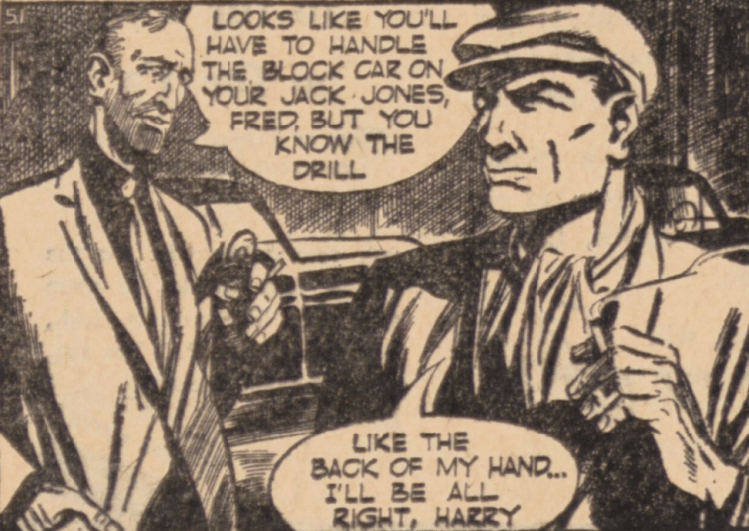
‘on one’s own’—UK, 1926—‘Jack Jones’ is rhyming slang for ‘alone’, or for ‘own’ in ‘on one’s own’
Read More word histories