‘brothel-creepers’: meaning and origin

1943—‘brothel-creepers’ (also ‘brothel-creeper shoes’ and ‘creepers’): denotes soft-soled shoes—refers to the stealthiness that those shoes permit
Read More
“ad fontes!”
1943—‘brothel-creepers’ (also ‘brothel-creeper shoes’ and ‘creepers’): denotes soft-soled shoes—refers to the stealthiness that those shoes permit
Read More[Preliminary note: All the biblical quotations in English are from the New International Version (2011).] Le Notre-Père, the French version of the Lord’s Prayer, was revised in La Bible : Traduction officielle liturgique (Paris: Éditions Mame, 2013), the official liturgical translation of the Bible. French-speaking Catholics used to say: Et ne nous soumets pas à la […]
Read Moremeaning: ‘extremely tired’—origin (Lancashire, England, 1859): from the noun ‘pow’, variant of ‘poll’, denoting ‘a person’s head’, and the adjective ‘fagged’, meaning ‘extremely tired’
Read Moredesignates an Englishman—originated among the French, from the fact that they regarded the exclamation ‘God damn’ as characteristic of the English—the Middle-French synonym ‘godon’ may be etymologically unrelated
Read MoreAustralia—meaning: (as a verb) to rest or spend time in an aimless, idle way; (as a noun) an instance or period of resting—origin: Army slang, Second World War, from the notion of lying on one’s back
Read More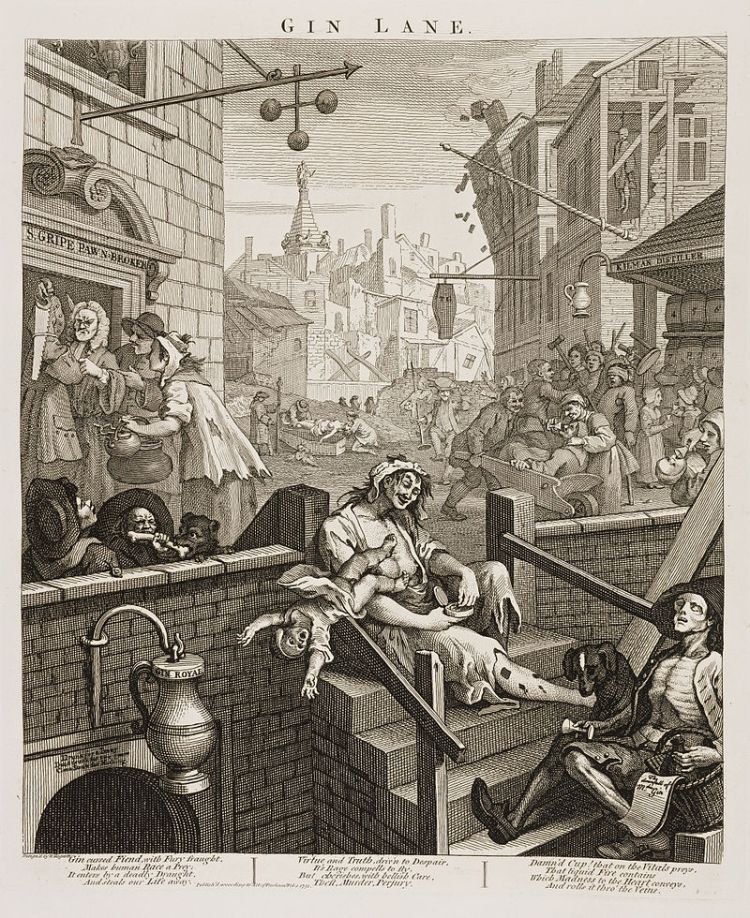
UK, 1904—denotes gin (i.e., a clear alcoholic spirit distilled from grain or malt and flavoured with juniper berries)—‘mother’s ruin’ alludes to the evils caused by the consumption of gin
Read MoreIn reference to the names of various stretches of the Spanish Mediterranean coast which are popular with British holidaymakers, the Spanish noun ‘costa’ is used humorously as the first element in various invented place names.
Read MoreUK, 1970—colloquial expression denoting a period in a broadcasting schedule regularly reserved for religious programmes
Read More
UK, 1969—a young man of a working-class subculture, characterised by close-cropped hair, heavy boots and functional clothing, and behaving in an aggressive or violent way—‘bovver’ represents a nonstandard pronunciation of ‘bother’
Read Morea nickname given to London, which has, since the collapse of the Soviet Union, attracted Russian oligarchs—also used earlier in reference to Communism—modelled on Russian city names such as ‘Leningrad’ and ‘Stalingrad’
Read More word histories