‘backstabbing’: meaning and origin
UK, 1803, as an adjective—UK, 1842, as a noun—in reference to the action or practice of attacking, or acting against, someone in a treacherous or underhand manner
Read More
“ad fontes!”
UK, 1803, as an adjective—UK, 1842, as a noun—in reference to the action or practice of attacking, or acting against, someone in a treacherous or underhand manner
Read MoreIreland, 1914—the action or practice of attacking, or acting against, someone in a candid or open manner, as opposed to deceptively or duplicitously—coined after ‘backstabbing’ (i.e., the action or practice of attacking, or acting against, someone in a treacherous or underhand manner)
Read MoreUSA, 1995—a freelance videographer or photographer, characterised as being extremely aggressive in pursuing celebrities to video or photograph them—a blend of the nouns ‘stalker’ and ‘paparazzo’
Read Morean early account of a forced choice from a number of horses, associated with William Hobson (died 1581), a London haberdasher—itself adapted from earlier accounts, in which the main protagonist remained unnamed
Read More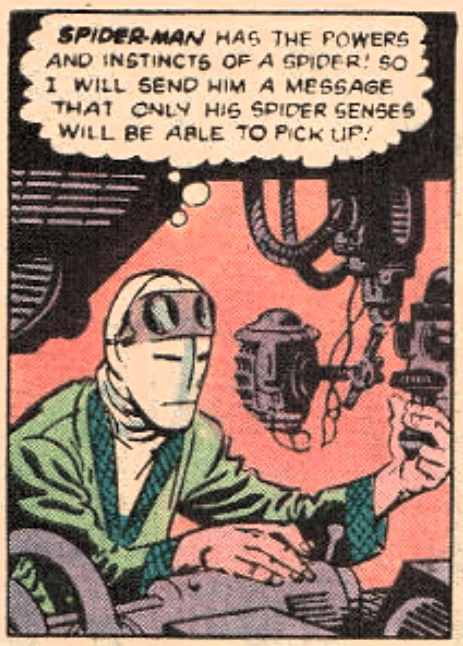
UK, 1914: an apparent ability to sense or intuit the presence of nearby spiders—USA, 1963, in reference to Spider-Man: a supernatural ability or power to perceive things beyond the normal range of human senses
Read Morechiefly UK politics—a culture characterised by influential networks of close friends—from ‘chum’ (a close friend) and ‘‑ocracy’ (forming nouns designating forms of government or groups who exercise political or social power)
Read MoreNew Zealand (1890) & Australia (1891)—to terrify somebody—probably modelled on the earlier phrase ‘to knock seven bells out of somebody’ (‘to give a severe beating to somebody’)
Read MoreUSA, 1826, as ‘to flog somebody like seven bells’—to give a severe beating to somebody—‘seven’ is perhaps simply an arbitrary intensifier—cf. phrases such as ‘like seven bells half-struck’ (‘with as much speed as possible’) and ‘to blow seven bells’ (‘to blow a violent gale’)
Read MoreUK & Ireland, 2005—the last Friday before Christmas—refers to the high number of fights caused by revellers on that day
Read MoreUSA, 1924—a questionable or unorthodox practice that has long been established—from literal uses (19th century onwards) referring to former Spanish colonies in America
Read More word histories