‘clever clogs’: meaning and origin
a person who behaves as if he or she knows everything—UK, colloquial, 1860—the irony of the expression lies in the fact that clogs are mere functional pedestrian objects
Read More
“ad fontes!”
a person who behaves as if he or she knows everything—UK, colloquial, 1860—the irony of the expression lies in the fact that clogs are mere functional pedestrian objects
Read MoreUK, 1907: ‘to ghostwrite’ (to write a book, an article, etc., for another person, under whose name it is then published—USA, 1908: ‘ghostwriter’ (a person who ghostwrites)
Read Moredominated by a woman or by women—UK, 1809—past participle of ‘ride’, ‘ridden’ combines with nouns to form adjectives meaning: afflicted, affected or dominated by something or by someone specified
Read More‘woodpushing’: chess-playing, draughts-playing—‘woodpusher’: a chess-player, a draughts-player—refers to the wooden pieces that chess-players and draughts-players move across the board
Read More
UK, 1951—‘mother-in-law’s chair’, ‘mother-in-law’s cushion’ and ‘mother-in-law’s seat’ are colloquial appellations for the globular spiny cactus Echinocactus grusonii, native to Mexico
Read More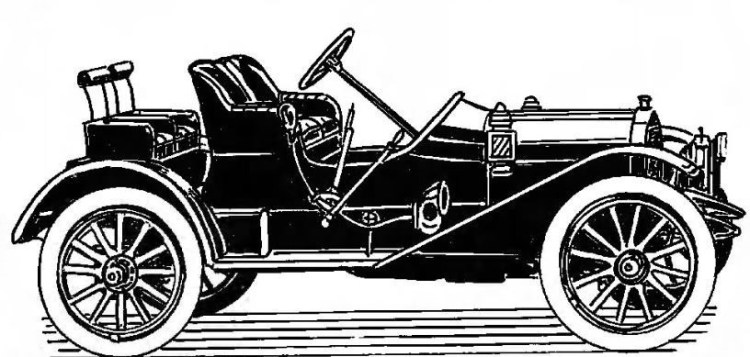
an uncovered extra seat at the back or on the side of a two-seater motor car—USA, 1907
Read MoreUSA, 1874—a joke made at the expense of the joke-teller’s (real or fictitious) mother-in-law; this type of joke considered (especially depreciatively) as a genre
Read MoreBritish, 1771—as an adjective: emaciated; weak and starving—as a noun: an emaciated or starving person
Read MoreEngland; also: the British Parliament—UK, 1857—popularised in 1865 by the British politician John Bright
Read More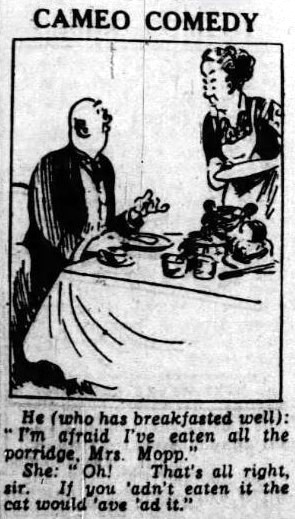
a charwoman, a cleaning lady—UK, 1940—popularised in 1942 by the charwoman’s name in the BBC radio comedy series ‘It’s That Man Again’
Read More word histories