‘Scousette’: meaning and origin
1945—a woman from Liverpool, a city and seaport in north-western England—from the noun ‘Scouser’, denoting a person from Liverpool, and the suffix ‘-ette’, used to form nouns denoting female gender
Read More
“ad fontes!”
1945—a woman from Liverpool, a city and seaport in north-western England—from the noun ‘Scouser’, denoting a person from Liverpool, and the suffix ‘-ette’, used to form nouns denoting female gender
Read MoreThe humorous expression ‘elbow grease’ (1639) denotes vigorous physical labour, especially hard rubbing. The corresponding French expression is ‘huile de coude’ (1761), literally ‘elbow oil’.
Read MoreNorthern England—a filled or open sandwich—originally (1827): a slice of bread spread with butter—composed of ‘butt-’, from the noun ‘butter’, and the suffix ‘-y’, forming diminutive nouns
Read More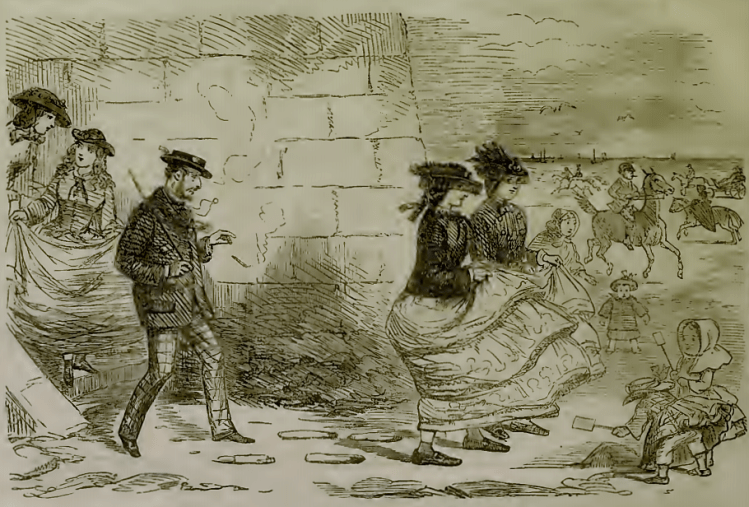
denotes a foot or a boot, especially a big one—1856, in the caption to a cartoon by John Leech, published in Punch (London, England): “A vulgar and disgusting expression, implying that a foot is big enough, and flat enough, to kill Black-beetles”
Read More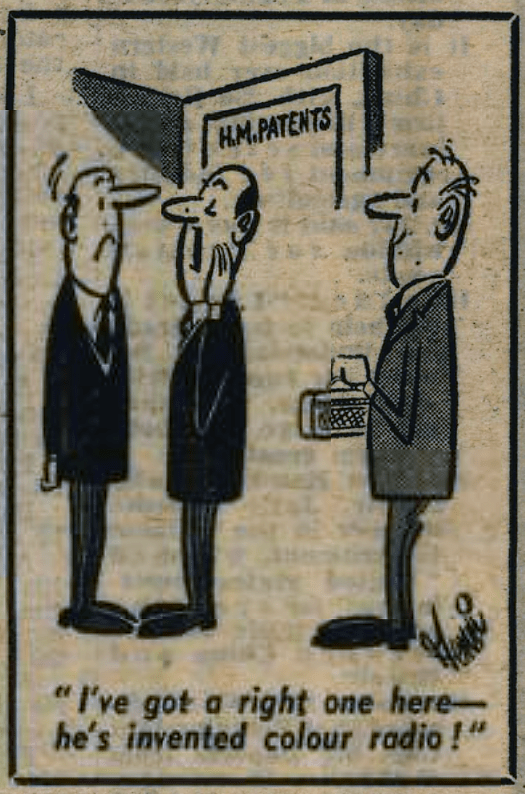
UK, 1958—The phrase ‘we’ve got a right one here’ is used of an odd person or of an idiot. Typically, the speaker uses this phrase when talking to someone about a third party.
Read MoreLancashire, England, 1973—a wasted journey; a weird way of behaving; a fit of ill temper—origin unknown—one hypothesis is that when wine boats from the Mediterranean arrived in Liverpool, the wine was occasionally sour and therefore useless
Read MoreUSA, 1812—UK, 1818—the name of a character proverbially said to have been so great a liar that he was expelled from Hell—hence, frequently in ‘a bigger liar than Tom Pepper’, and variants: an outrageous liar
Read More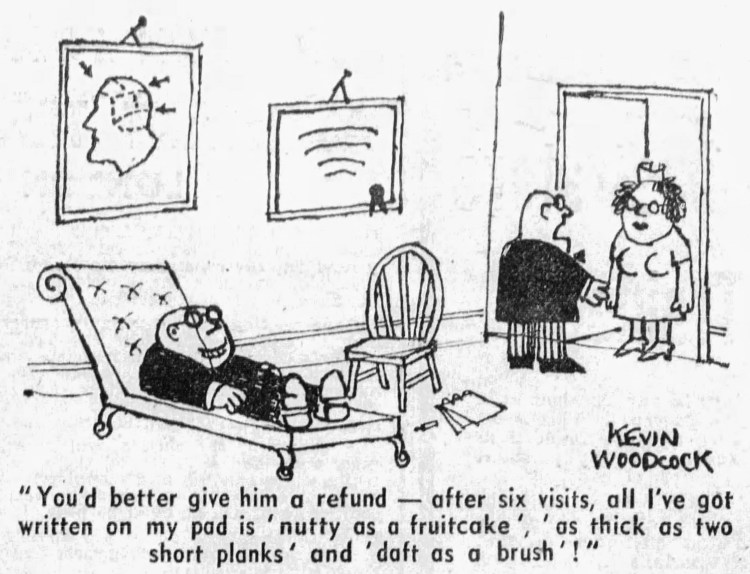
UK, 1954—very stupid—the humorous arbitrary comparison with ‘two short planks’ gives emphasis to the adjective ‘thick’, meaning stupid
Read MoreLancashire, England, 1833—a faggot, a meatball, “a compound of onions, flour, and small pieces of pork” (The Liverpool Echo, 20 August 1880)—probably one of the common dishes humorously named after daintier items of food
Read MoreLiverpool, England, 1939—scouse without meat—“from the general early sense of ‘blind’ meaning ‘deficient’” (Liverpool English Dictionary)—‘scouse’, shortened form of ‘lobscouse’: “a dish of hashed meat stewed with potatoes and onions; an Irish stew” (English Dialect Dictionary)
Read More word histories