origin of the word ‘immolate’
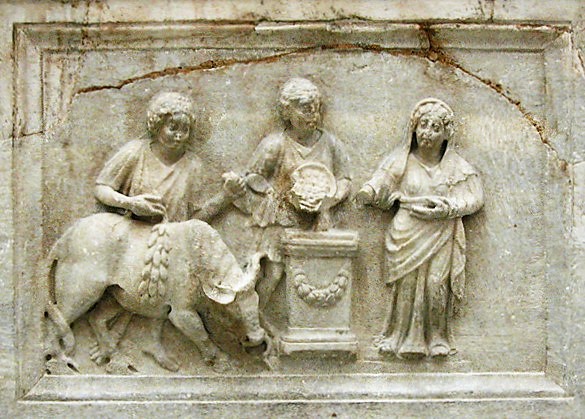
The verb ‘immolate’ is from Latin ‘immolare’, meaning, literally, ‘to sprinkle (a victim) with sacrificial meal’, from ‘mola salsa’, ‘salted spelt-meal’.
Read More
“ad fontes!”
The verb ‘immolate’ is from Latin ‘immolare’, meaning, literally, ‘to sprinkle (a victim) with sacrificial meal’, from ‘mola salsa’, ‘salted spelt-meal’.
Read MoreThe verb ‘sneeze’ is an alteration of the obsolete verb ‘fnese’ due to misreading or misprinting it as ‘ſnese’ (= ‘snese’).
Read More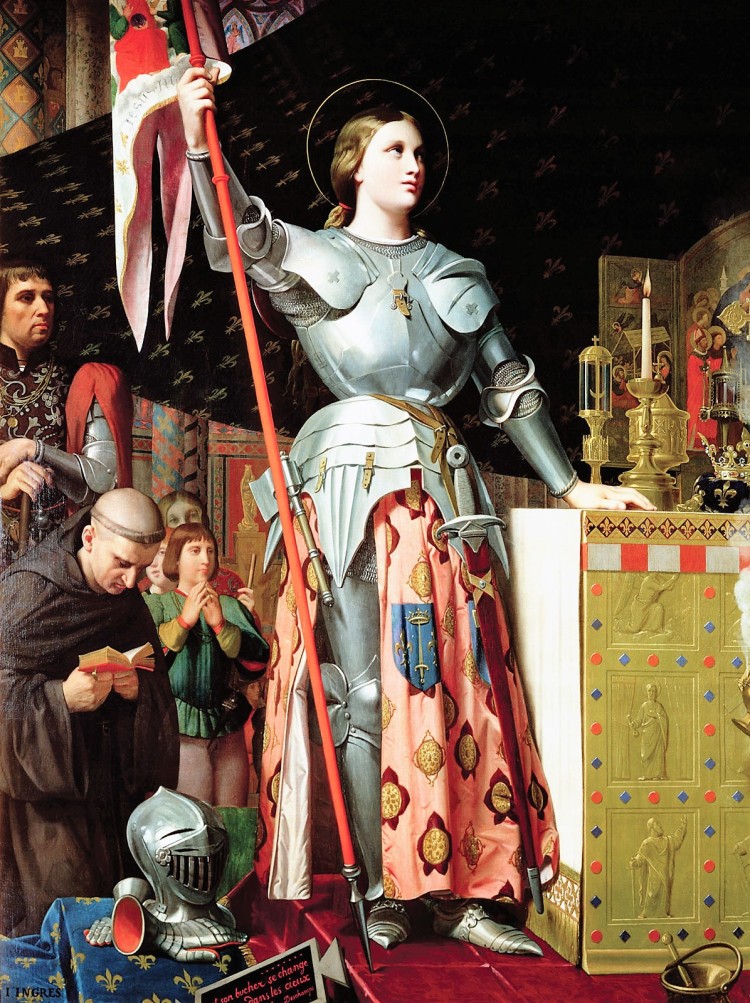
English ‘cap-a-pie’ is from ‘de cap à pied’, ‘from head to foot’, used in Occitan and in the Middle French of southern France.
Read MoreThis phrase originated in the belief that bear cubs were born formless and had to be licked into shape by their mother.
Read MoreThe noun ‘pink’ for the flower is perhaps short for ‘pink eye’, ‘small or half-shut eye’ (cf. French ‘œillet’, ‘carnation’, diminutive of ‘œil’, ‘eye’).
Read More
Before being a science-fiction term used by aliens to refer to an inhabitant of the earth, ‘earthling’ denoted an inhabitant of the earth as opposed to heaven.
Read More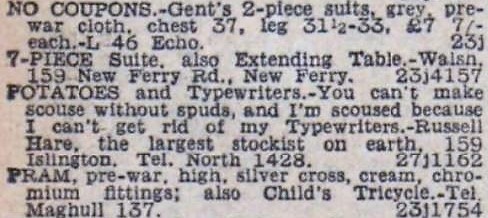
The original sense of ‘Scouse’, denoting a person from Liverpool, is ‘a stew’. The word ‘scouse’ is in turn a shortening of ‘lobscouse’, of obscure origin.
Read MoreThe word ‘tyke’, a nickname for a person from Yorkshire, originally meant ‘mongrel’. The people from Yorkshire have adopted it as a term of self-reference.
Read More
‘Over the top’, which means ‘excessive’, originated as a WWI expression meaning ‘over the parapet of a trench and into battle’.
Read More
The French word for the oyster-shaped piece of meat in the hollow of the pelvic bone of a fowl is ‘sot-l’y-laisse’, literally ‘(the) fool leaves it there’.
Read More word histories