‘(as) drunk as Chloe’: meaning and purported origin
UK, 1788—very drunk—may refer to Chloe, a woman with whom the English poet Matthew Prior (1664-1721) allegedly drank, and whom he often mentioned in his poems
Read More
“ad fontes!”
UK, 1788—very drunk—may refer to Chloe, a woman with whom the English poet Matthew Prior (1664-1721) allegedly drank, and whom he often mentioned in his poems
Read MoreUSA, 1937, as a wrestling term—an act of placing both hands on a person’s wrist or arm and then twisting it to produce a burning sensation—alludes to the fiendish methods of torture attributed to the ‘(Red) Indians’
Read More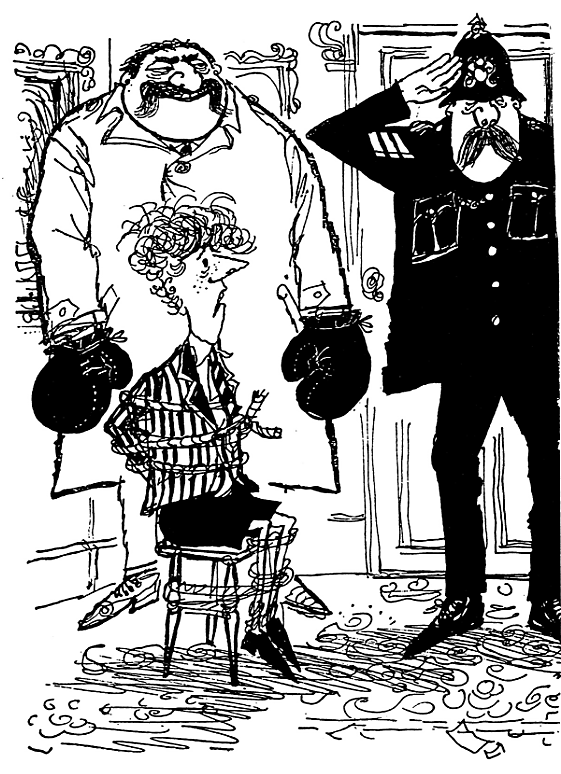
UK, 1956, children’s slang—an act of placing both hands on a person’s wrist or arm and then twisting it to produce a burning sensation—alludes to the fiendish methods of torture attributed to the Chinese
Read More
Australia, 1952—to travel a long distance—refers to the Burke and Wills expedition of 1860-61, which aimed to cross Australia from Melbourne, in the south, to the Gulf of Carpentaria, in the north
Read More
the movement of the hand in brushing away flies—first recorded in 1967 in a speech by Fred Chaney, Member of the Australian House of Representatives—variants: ‘the Queensland salute’; ‘the Barcoo salute’
Read Moredenotes effrontery—‘front’ denotes self-assurance, but the word that follows ‘than’ puns on ‘front’ in the sense of the façade of a building, a long seafront, etc.—also denotes a well-endowed woman, with reference to ‘front’ in the sense of a woman’s bust
Read More‘nothingburger’: a person or thing of no importance, value or substance—‘mouseburger’: a young woman of unexceptional appearance and talents, regarded as timid, dowdy or mousy—from the use of ‘burger’ as the second element in compounds denoting types of hamburger
Read MoreUK, 1710—in ease and luxury—refers to the use of clover as fodder, as explained by Samuel Johnson in A Dictionary of the English Language (1755): “To live in Clover, is to live luxuriously; clover being extremely delicious and fattening to cattle.”
Read Moredenotes effrontery—‘front’ denotes self-assurance, but the word that follows ‘than’ puns on ‘front’ in the sense of the façade of a building, the part of a garment covering a person’s front, etc.
Read More
the nickname that the Venetian opera audience gave to Joan Sutherland when she sang Handel’s Alcina at the Fenice Theatre on 21 February 1960—Italian ‘è stupenda’ translates as ‘she is stupendous’
Read More word histories