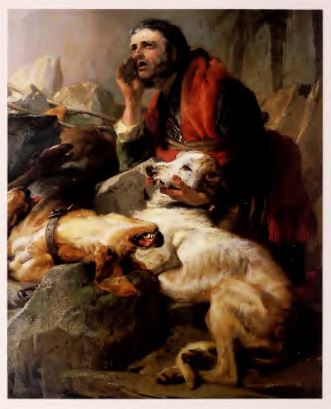
an assertion of continuing competence, strength, etc., notwithstanding evidence to the contrary—from the title of a painting by the British artist Edwin Landseer, first exhibited in 1838
UK, 1848: a tendency to ‘talk shop’—UK, 1854: something that is characteristic of a shop displaying various kinds of goods (i.e., something that is composed of disparate commonplace elements)
USA, 1936—characteristic or reminiscent of the Left Bank (‘Rive Gauche’ in French), the part of Paris south of the River Seine, noted for its intellectual and artistic life
USA, 1888—an enigmatic, mysterious smile, reminiscent of that represented in the Mona Lisa, a portrait of Monna Lisa del Giocondo, painted by Leonardo da Vinci
the affected dandyism of the writers, artists, etc., associated with the aesthetic movement, which advocated a doctrine of ‘art for art’s sake’—UK, 1879—coined by George Du Maurier in cartoons published in Punch
inauthentic archaic language, especially as affected by authors of historical novels—UK, 1867—alludes to the fact that, in the 19th century, Wardour Street, in London, became known for its many shops specialising in imitations of antique furniture
Australia, 1907—very spirited or brave—refers to the Australian outlaw Ned Kelly (1855-1880), leader of a band of horse and cattle thieves and bank raiders operating in Victoria, who was eventually hanged in Melbourne
‘impressionist’ (1875) from French ‘impressionniste’ (1874)—a painter who was an exponent of ‘impressionism’ (1877), a movement in painting developed in France in the last third of the 19th century—French ‘impressionnisme’ may have been coined in 1858
UK—2008 ‘fatberg’, after ‘iceberg’: a large mass of fat and waste material in a sewerage system—originally a large lump of congealed cooking fat washed up on a beach—2019 ‘concreteberg’, after ‘fatberg’: a large mass of concrete in a sewerage system, consisting of cement that has been poured down a drain



 word histories