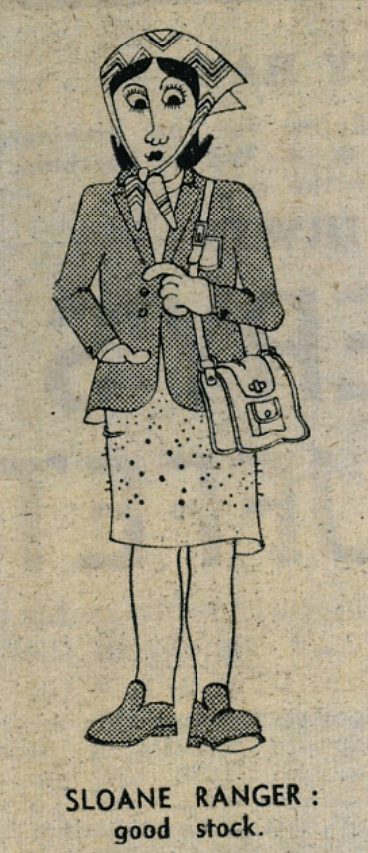
UK, 1975—an upper-class and fashionable, but conventional, young woman in London—blend of ‘Sloane Square’, the name of a square located in an affluent area of London, and ‘Lone Ranger’, the name of a well-known hero of western stories and films
UK, 1920—an Arab man—‘Johnny’, a pet form of ‘John’, is used, with modifying word, to designate a person, especially a man, of the type, group, profession, etc., specified
UK, 1912—humorous: a Jewish person—refers to the Crossing of the Red Sea, as recounted in the Book of Exodus—coined on various occasions by different persons, independently from each other
a standard or device for the measurement of foolishness or folly—coined by the British author Sydney Smith (1771-1845) in ‘Second Letter to Archdeacon Singleton, Being the Third of the Cathedral Letters’ (London, 1838)
USA, 1957—the rhythm method of birth control, as permitted by the Roman Catholic Church—with allusion to the unpredictable efficacy of this contraceptive method: from ‘Vatican’, denoting the authority of the Roman Catholic Church, and ‘Russian roulette’
UK, 1974—applied jocularly to any supposed network of prominent or influential Welsh people, especially one which is strongly nationalistic—a blend of ‘Taffy’, denoting a Welshman, and ‘Mafia’
USA, 1917—originally and chiefly military slang—an inspection of the penis for venereal disease or other infection—the image is of the penis as an additional, but shorter, limb
UK, 1847—a fall in value, especially a reduction in wages—one of several expressions denoting the opposite in meaning of the noun qualified by the genitive case of ‘Irishman’—for example: ‘Irishman’s promotion’ (a demotion) and ‘Irishman’s hurricane’ (nautical: a flat calm)



 word histories