‘the Ham and Egg Parade’: meaning and origin
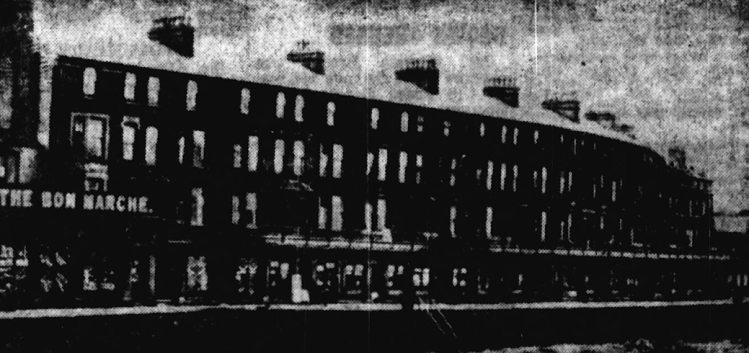
UK, 1880—a promenade at the seaside resort of New Brighton, in north-western England—alludes to the fact that cooked ham served with eggs was a popular dish at New Brighton’s eating-places
Read More
“ad fontes!”
UK, 1880—a promenade at the seaside resort of New Brighton, in north-western England—alludes to the fact that cooked ham served with eggs was a popular dish at New Brighton’s eating-places
Read MoreAustralian English, 1848: any urban area (said to be of Aboriginal origin)—Irish and British English, 1862: Dublin and London—alludes to smoke as characteristic of an urban area
Read MoreAustralia, 1893—refers to extreme thirst or to extreme dryness—popularised by the Australian short-story writer and balladist Henry Lawson (1867-1922)
Read MoreAustralia, 1901—refers to rough penmanship—alludes to Clancy of the Overflow (originally published in The Bulletin, Sydney, on 21st December 1889), by the Australian poet Andrew Barton Paterson
Read More1842—The noun ‘patter’ denotes the sound of light footfall, and the phrase ‘the patter of tiny feet’, and its variants, denote the presence of one or several young children, or the imminent birth of a child.
Read More
USA, 1925—this phrase refers to the impossibility of reverting a situation to how it formerly existed
Read Moreto eat heartily—first occurs in Augusta Triumphans: Or, The Way to make London the most flourishing City in the Universe (1728), by Daniel Defoe
Read MoreUK, 1982—denotes a headbutt—alludes to the reputation for violence accorded to some parts of Glasgow, a city in west-central Scotland
Read MoreAustralia, 1944—jocular—denotes the Yarra River, which flows through Melbourne, Victoria—alludes to the brownish colour of this river, the image being that the mud is on the top, not at the bottom, of this river
Read MoreAustralia, 1981—very dry—alludes to the alleged poor personal hygiene of the British—here, the Australian noun ‘Pommy’ designates a British person
Read More word histories