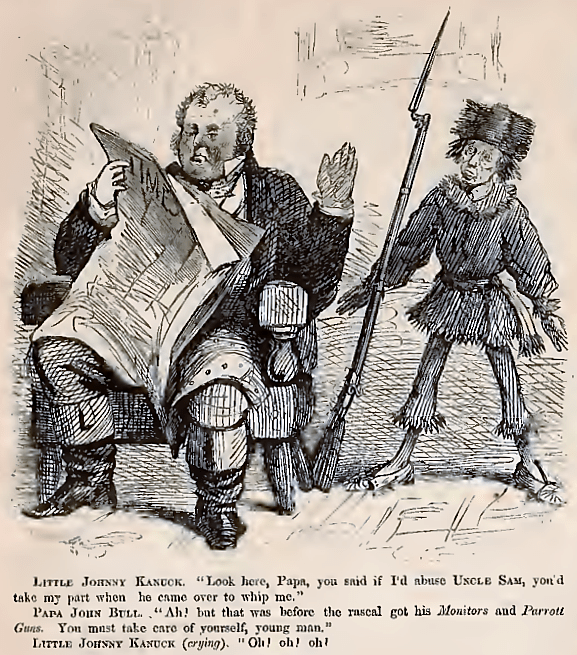
USA, 1858—a personification of the Canadian nation; Canadian people collectively; as a count noun: a Canadian—from ‘Canuck’, meaning Canadian—‘Johnny’ is used with modifying word to designate a person of the type, group, profession, etc., specified
to be grateful for one’s good fortune—18th century—from the notion that a planet, star or zodiacal constellation influences events and human affairs—this notion had given rise in the 16th century to the phrase ‘to thank (or to curse) one’s stars’
USA, 1973—a suburban mother who spends a lot of time taking her children to play soccer or engage in similar activities—popularised during the presidential election campaign of 1996 as designating an influential voting bloc
a lively but ineffectual young upper-class man—UK, 1959—apparently coined in the 1950s by the British jazz manager James Godbolt after ‘Hoorah Henry’, coined in 1936 by the U.S. author Alfred Damon Runyon
Australia, 1834—used in various phrases, in particular as a type of someone or something in a very bad state or condition—also in the phrase ‘all behind like Barney’s bull’, meaning ‘very delayed’ or ‘backward’—origin unknown
a country characterised by absurdity—originally used of Czechoslovakia—the suffix ‘-istan’ (in country names such as ‘Pakistan’) is used as the second element in satirical names denoting, in particular, ‘a country characterised by [the first element]’
Australia—also ‘to bang like a shithouse door’—used of an exceptional sexual partner—plays on two meanings of the verb ‘bang’: ‘to make a loud noise’ and ‘to have sexual intercourse’
suicide committed by a person, especially a child or young adult, as a result of being bullied—blend of the nouns ‘bully’ and ‘suicide’—coined since 2001 on separate occasions by various persons, independently from one another
Australia, 1972—a jocular curse—the Australian National Dictionary Centre explains that this phrase “recalls an earlier time when many Australians kept chooks (domestic chickens) in the backyard and the dunny was a separate outhouse”

 word histories