‘old boiler’: meaning and origin
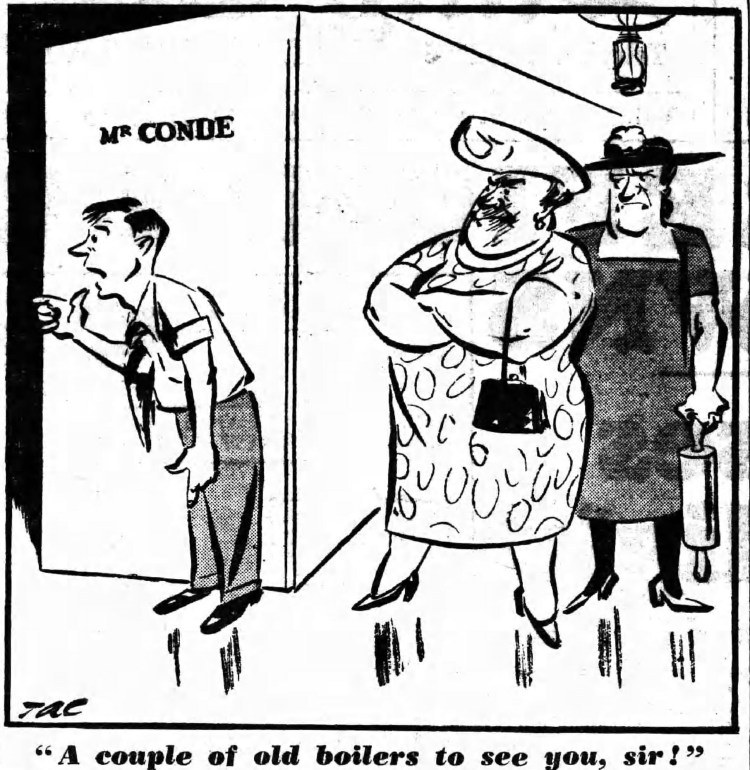
Australia, 1950—UK, 1962—derogatory and offensive: a middle-aged or elderly woman, especially one who is unattractive or unfeminine—refers to ‘boiler’, i.e., a tough old chicken for cooking by boiling
Read More
“ad fontes!”
Australia, 1950—UK, 1962—derogatory and offensive: a middle-aged or elderly woman, especially one who is unattractive or unfeminine—refers to ‘boiler’, i.e., a tough old chicken for cooking by boiling
Read MoreAustralia, 1965—the Strine equivalent of ‘glorious home’—‘Strine’: the English language as spoken by Australians
Read Morethe State of New South Wales—Australia, 1905—alludes to New South Wales as the ‘mother’ colony, i.e., the first colony that Britain founded in Australia—hence (1908) ‘Ma Stater’, a native or inhabitant of New South Wales
Read MoreBritain, 1746—refers to old-fashioned medicinal remedies—notably used by Charles Dickens in ‘The Life and Adventures of Nicholas Nickleby’ (1838-39)
Read MoreAustralian slang, 1960s—the unpalatable and unnutritious evening stew that used to be served to prison inmates—by extension: any unpalatable item of food
Read MoreUK, 1980—is used by, or of, a woman who asserts her determination to do what she has decided to do—from Margaret Thatcher’s speech delivered on 10 October 1980 at the Conservative Party Conference in Brighton
Read Morethe discipline of moving rapidly and freely over or around the obstacles presented by an urban environment by running, jumping, climbing, etc.—French—altered spelling of the noun ‘parcours’ in ‘parcours d’obstacles’ (i.e., ‘obstacle course’)
Read Morethe solution to a problem is very straightforward and easy—UK, 1901—supposedly said by Sherlock Holmes to Dr. Watson—but this phrase is not (in this form) found in any of Arthur Conan Doyle’s stories
Read Morean international athletic competition, modelled on the Olympic Games, for disabled athletes—UK, 1953—from the prefix ‘para-‘ in ‘paraplegic’ and ‘-lympics’ in ‘Olympics’—cf. early synonym ‘Paraplegic Games’
Read Moreis used to comment contemptuously on an instance of unthinking imitation, or of learning or performing by rote—USA, 1889—apparently first used by Californian retailers
Read More word histories